Alright, so picture this: I'm staring at my screen, coffee getting cold, scrolling through the usual deluge of AI breakthroughs, quantum computing whispers, and the latest gadget releases. You know, the good stuff. My brain is all wired for silicon, algorithms, and maybe a dash of cyber-physical systems. And then, this lands in my inbox, flagged as 'tech news'.
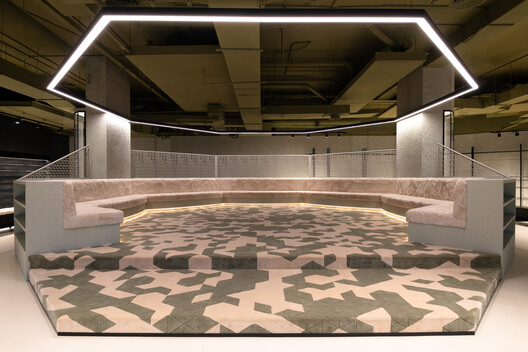
And I read it. And I re-read it. It talks about a 'flagship store in Dubai', designed by MEAN* (Middle East Architecture Network), led by a guy named Riyad Joucka. It's for Khabib Nurmagomedov's lifestyle brand, 'Send Location'. A 300-square-meter interior. Conceived as 'a place of gathering as much as a place of retail'. Organized around an 'octagon shaped Majlis'.
Now, I'm not gonna lie. My first thought? "Uh, did someone accidentally send me an architecture brief?" I mean, I appreciate good design, absolutely. But 'tech news'? My tired brain did a double-take. Like, where's the AI? The blockchain? The smart sensors embedded in the octagon that predict your mood and suggest bespoke athleisure wear? That's what I was looking for, right?
But then, I let it simmer. And actually, this *is* interesting. Maybe it's not 'tech' in the silicon-and-code sense, but it speaks volumes about where the 'digital' and 'physical' worlds are colliding, or at least, trying to. Think about it: 'Send Location'. The name itself screams digital navigation, GPS coordinates, sharing your whereabouts. And then you get this intensely physical, culturally resonant space. It's almost a statement, isn't it?
The Physical Anchor in a Digital Sea
We're living in an era where, for a significant chunk of our lives, our 'location' is a dot on a map app, or a check-in on social media. Our shopping, our social interactions, even our work – increasingly digitized, distanced. So, what does it mean to create a physical flagship store, especially one called 'Send Location', that prioritizes 'gathering' over mere transaction?
MEAN* and Riyad Joucka seem to understand this paradox implicitly. The store, designed for Khabib Nurmagomedov's brand (a pretty iconic figure himself, known for his roots and discipline), isn't just a place to pick up a hoodie. It's a statement about community. About belonging. About a physical 'location' that grounds you, rather than just a digital one you ping to your friends.
The core of this design, the 'octagon shaped Majlis', is brilliant. A Majlis, for those unfamiliar, is a traditional Arabic meeting place. A space for conversation, hospitality, a real community hub. To integrate an octagon – yes, like a fighting octagon, given Khabib's background – into this traditional gathering space? That's a clever fusion of cultural heritage, personal brand identity, and a distinctly modern function. It creates a focal point. A place where you're meant to *linger*, not just buy and leave. A real physical anchor, like I said. This isn't just retail; it's experience architecture.
The Unseen Tech (or the Lack Thereof)
Okay, so where's the tech, really? The description doesn't explicitly mention augmented reality mirrors, or AI-powered personal shoppers, or smart shelves that track inventory in real-time. And maybe that's the point. Maybe the 'tech' here is in the *concept*. The deliberate counter-programming to an increasingly digital world.
Or, perhaps, it's the subtle, invisible tech that we now expect in any modern space. Optimal climate control, advanced security systems, seamless digital payment options. Things we take for granted. But I'd love to know if there's more. Are there interactive displays telling Khabib's story? Are there digital touchpoints that connect the physical experience to the online brand? Because if there aren't, it's a bold move, relying almost entirely on the power of physical presence and design.
It reminds me a bit of how some high-end brands are doing pop-ups in the metaverse, right? Creating these ephemeral, digital experiences. But this is the inverse: taking a brand born, in a way, from physical prowess and global reach, and giving it a deeply rooted, tangible, human-centric home. It's a testament to the enduring power of real-world connection, even when technology is constantly pushing us towards virtual ones.
Implications: More Than Just a Store
This 'Send Location' store isn't just a retail outlet; it's a statement about the future of brand engagement. It suggests that in a world awash with digital noise and endless online shopping carts, the true luxury, perhaps the true innovation, is creating spaces that foster genuine human connection. Spaces that make you want to physically *be* there. It's about providing a reason to show up, beyond just a transaction.
For lifestyle brands, this approach is critical. They're not just selling products; they're selling an identity, a philosophy. A digital presence can convey that to a degree, but a well-designed physical space, especially one rooted in community like this, can really cement it. It allows people to immerse themselves, to breathe the brand's air, so to speak. And that's powerful. Really powerful.
However, it's also a significant investment. Designing and maintaining such a space, especially one meant for 'gathering', requires a different kind of operational thinking than a pure retail store. How do you measure ROI on 'community building'? What's the balance between welcoming people to gather and ensuring they also, you know, *buy* something? These are the challenges that blend architecture, retail strategy, and yes, even data analytics (for tracking engagement, footfall, etc., though the description doesn't mention it, I bet it's there in the background).
The blend of traditional (Majlis) and contemporary (octagon, lifestyle brand) is fascinating. It shows a forward-thinking approach that doesn't discard heritage but reinterprets it for a modern context. That's innovation, right there. Not necessarily silicon and circuits, but a thoughtful, human-centered approach to space and experience.
So, yeah, it wasn't the AI news I expected. But maybe that's exactly why it caught my attention. It's a reminder that even as we hurtle towards ever more complex digital futures, the fundamental human need for connection, for physical spaces, for a sense of 'place', isn't going anywhere. In fact, it might be becoming even more precious. It makes you wonder, doesn't it, if the ultimate 'tech' solution to our hyper-digital lives is actually something deeply, beautifully analog?
🚀 Tech Discussion:
What do you think? In an increasingly digital world, are physical spaces designed for 'gathering' the ultimate luxury, or a necessary evolution for brands to truly connect? Does this kind of architectural design count as 'tech' in your book?
Generated by TechPulse AI Engine