
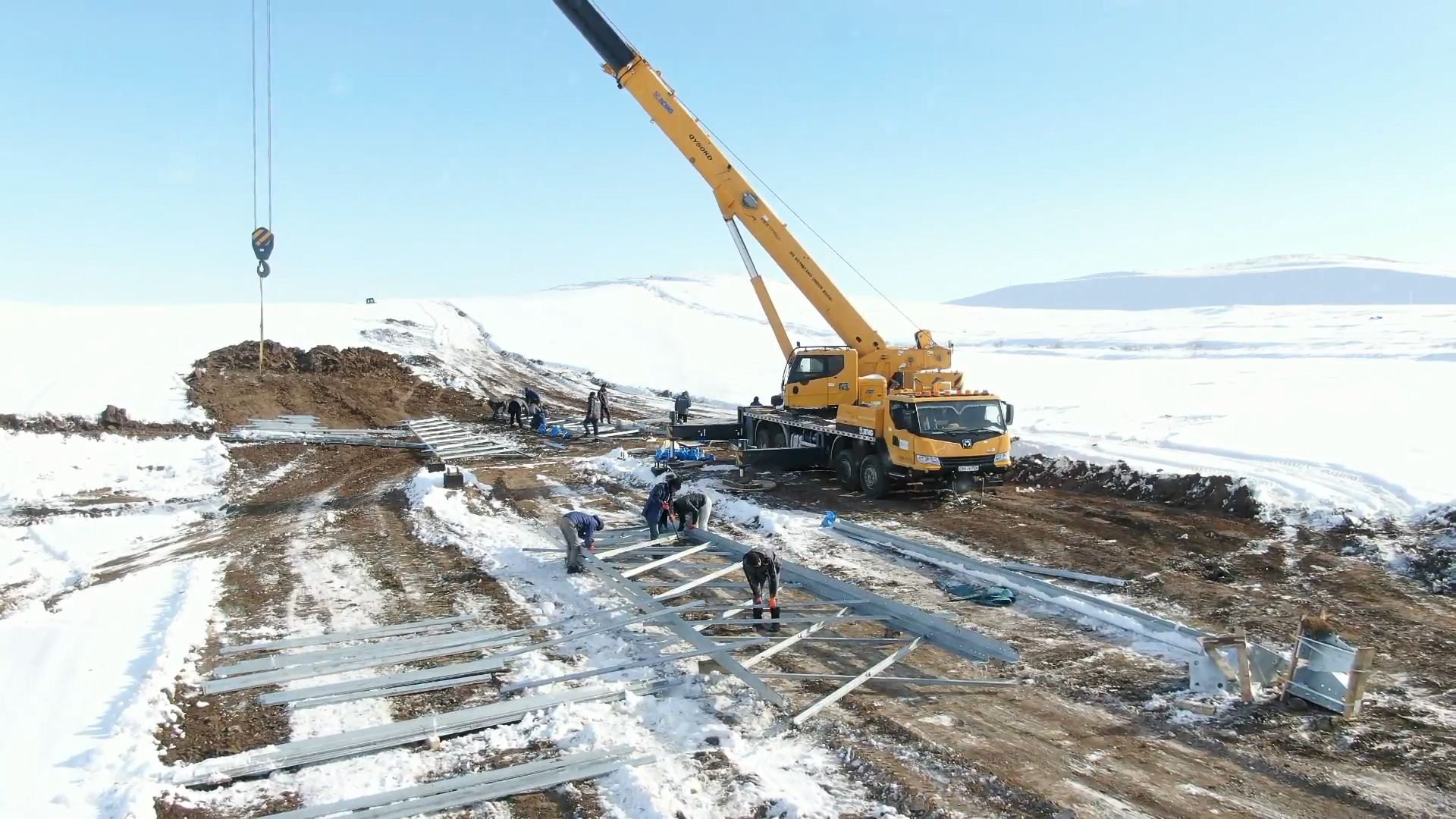
In a move that transcends mere infrastructure development, Azerbaijan has commenced construction on the Zangezur transmission line, an ambitious project poised to fundamentally reshape the energy landscape of the South Caucasus and beyond. This initiative is not simply about connecting the Nakhchivan Autonomous Republic to Azerbaijan’s national grid; it's a strategic linchpin in forming the nascent Azerbaijan–Türkiye–Europe international energy corridor, promising profound geopolitical, economic, and technical ramifications.
Bridging Isolation: The Geopolitical Chessboard
The Nakhchivan Autonomous Republic, geographically separated from mainland Azerbaijan by Armenian territory, has historically faced unique energy security challenges. Its reliance on independent, often less efficient, power generation or limited cross-border connections has long been a vulnerability. The Zangezur line directly addresses this by physically integrating Nakhchivan into Azerbaijan’s unified electricity system. This physical connection is a powerful geopolitical statement, reinforcing territorial integrity and fostering greater regional stability, particularly in the context of the broader Zangezur Corridor discussions.
Beyond domestic integration, the line's designation as a component of an international energy corridor elevates its significance. It signals Azerbaijan’s intent to further solidify its role as a key energy transit hub, diversifying its energy export portfolio beyond traditional oil and gas to include electricity, thereby strengthening its strategic partnership with Türkiye and opening new pathways to European markets.
The Technical Tapestry: Weaving Grids Together
From an engineering perspective, the Zangezur transmission line represents a significant undertaking, demanding rigorous technical precision for successful grid integration. The primary challenge lies in synchronizing the Nakhchivan grid, which has operated with a degree of autonomy, with the larger, interconnected Azerbaijani national system. This involves meticulous matching of frequency, voltage, and phase angles to prevent instability, power oscillations, and potential blackouts during the commissioning phase and subsequent operation.
Synchronization and Stability
The project likely entails the construction of new high-voltage alternating current (HVAC) transmission lines, potentially operating at 330 kV or higher, to ensure efficient power transfer over long distances. Key substations at both ends – and potentially intermediate points – will be crucial for voltage transformation, power factor correction, and facilitating seamless grid integration. These substations will house advanced protective relays, circuit breakers, and Supervisory Control and Data Acquisition (SCADA) systems to monitor and control power flow, respond to faults, and maintain grid stability in real-time. The robust design must account for dynamic load changes, fault conditions, and potential grid disturbances to ensure reliable power delivery.
Capacity and Future-Proofing
The fact that this line is envisioned as part of a corridor to Europe suggests significant capacity requirements, necessitating high-capacity conductors and robust tower designs. Engineers will also have to consider the potential for future upgrades, perhaps even the eventual integration of high-voltage direct current (HVDC) technology for even more efficient long-distance transmission and asynchronous grid interconnections, especially if the European component expands significantly. Such foresight is critical for long-term viability and maximizing the corridor's potential.
Economic Currents and Environmental Considerations
Economically, the Zangezur power line offers multi-faceted benefits. For Nakhchivan, it guarantees enhanced energy security, potentially lowering electricity costs, and stimulating economic development by providing reliable, affordable power for industries and households. For Azerbaijan, it diversifies export revenue streams and strengthens its energy diplomacy. The potential to export green energy in the future, as Azerbaijan expands its renewable energy portfolio, could further enhance the corridor's value and align with European decarbonization goals, although this initial phase focuses on grid integration.
A Corridor to the Future
The Zangezur transmission line is more than just a power cable; it is a strategic artery. Its completion will not only end Nakhchivan’s energy isolation but also lay critical groundwork for a more integrated and resilient regional energy architecture. As the Azerbaijan–Türkiye–Europe corridor takes shape, this project will stand as a testament to engineering prowess and strategic vision, with far-reaching implications for regional cooperation, energy security, and economic prosperity.
🚀 Tech Discussion:
The Zangezur power line is a fascinating case study in how energy infrastructure can serve both immediate national needs and broader geopolitical ambitions. The technical challenges of integrating disparate grids, especially across geopolitically sensitive corridors, are immense, yet their successful implementation can unlock tremendous economic and strategic value. The real long-term test will be how smoothly this 'corridor' evolves into a truly interconnected European energy artery, balancing technical demands with fluctuating regional politics and energy market dynamics.
Generated by TechPulse AI Engine