
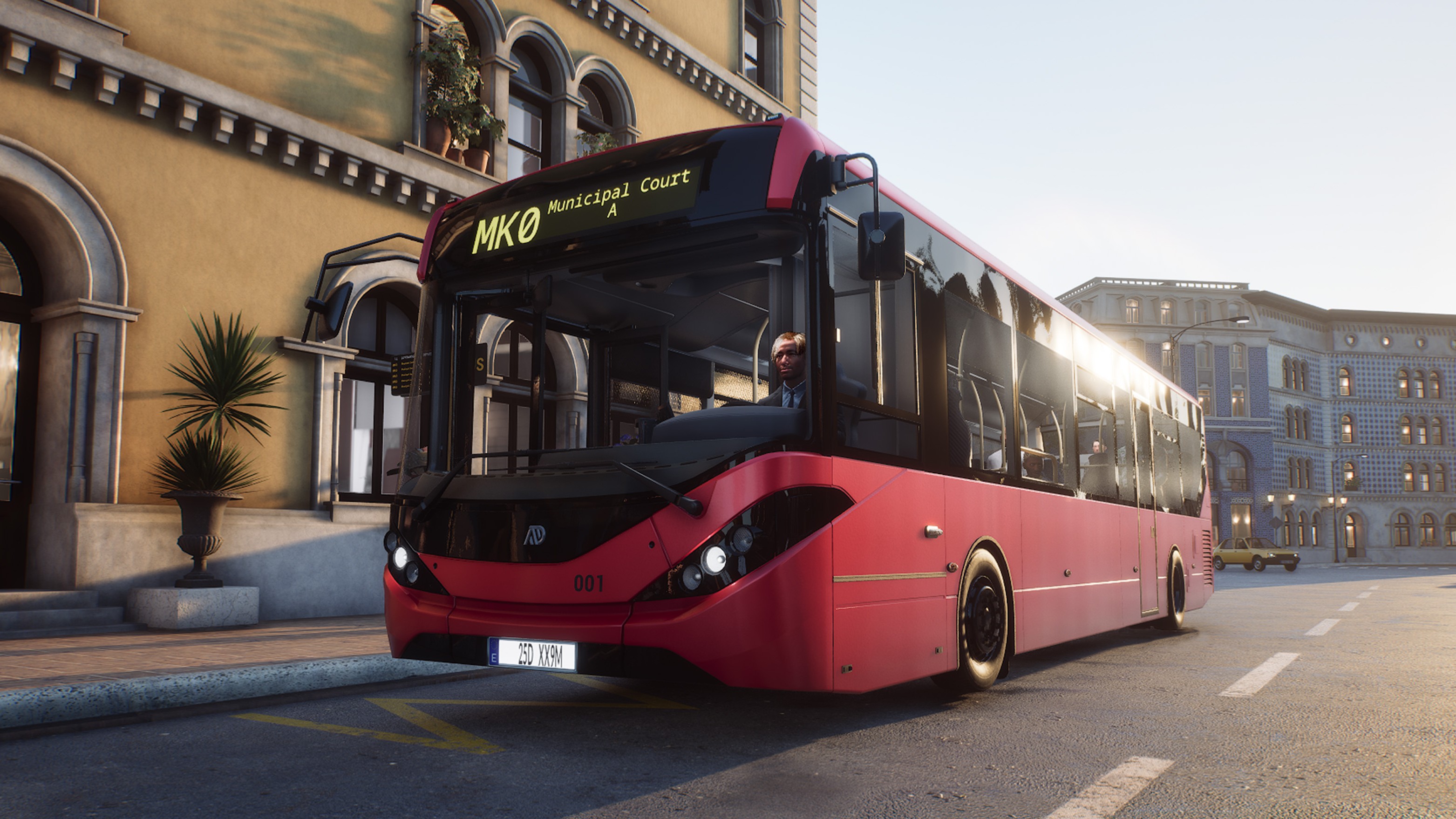
Okay, deep breaths. Confession time. I, a supposedly rational human who spends her days dissecting AI models and blockchain controversies, find myself… genuinely intrigued. No, scratch that. Excited. Borderline giddy, even. For a *bus simulator*.
Specifically, Publisher Astragon Entertainment just dropped the news about Bus Simulator 27. And not just any bus simulator. Oh no. This one's being touted as the 'most ambitious and content-rich Bus Simulator to date.' And honestly? My first reaction wasn't an eye-roll. It was a slight, involuntary lean forward. Like, 'tell me more, you digital public transport dream weavers.'
It sounds absurd, right? Sitting in virtual traffic. Sticking to a schedule. Opening and closing doors. Dealing with… virtual passengers. The sheer mundane beauty of it all. But hear me out, because there’s something fascinating happening under the hood of these seemingly niche simulation games, and it speaks volumes about where gaming, and even broader tech, is heading. It’s not just about buses, it’s about the simulation of reality itself.
The Unsung Heroes of Hyper-Realism
Think about it. We’ve had flight simulators for decades – complex beasts that even actual pilots use for training. We’ve had train simulators, truck simulators (shoutout to my fellow Euro Truck Simulator 2 fanatics, you know who you are). But bus simulators? They often feel like the quiet, unassuming cousin at the family gathering. Yet, they are quietly pushing boundaries in a way that blockbuster AAA titles sometimes overlook.
What makes a bus simulator ‘ambitious’ and ‘content-rich’? It’s not just about graphical fidelity, though that's certainly a part of it. We’re talking about incredibly detailed cityscapes, often modeled after real-world locations. Dynamic weather systems that actually impact driving physics. Advanced AI for traffic and pedestrians that tries to mimic actual human behavior – and, crucially, misbehavior. Because let's be real, real traffic isn't always smooth sailing. We're talking about managing routes, timetables, fuel consumption, passenger comfort, and even the occasional unruly virtual passenger who forgot their ticket. It’s a whole ecosystem.
The tech involved is pretty staggering, actually. Underneath those digital asphalt roads and carefully rendered bus stops are complex physics engines calculating everything from suspension bounce to brake fade. There are sophisticated AI algorithms making sure cars don't just drive in straight lines but actually react to signals, other vehicles, and your glorious bus. Plus, rendering entire, sprawling cities with realistic lighting and environmental effects? That’s no small feat for any game engine. It demands a lot from GPUs, CPUs, and frankly, the developers who painstakingly craft these digital worlds.
More Than Just a Game: A Digital Zen Garden
I remember years ago, after a particularly stressful week, I stumbled into Cities: Skylines. My goal wasn't to build some futuristic metropolis. It was just to lay down some roads, set up some bus routes (the irony!), and watch my little digital citizens go about their day. It was meditative. Almost therapeutic. The low stakes, the repetitive tasks, the gradual sense of control over a small, simulated world – it was incredibly calming. And I think that’s a huge part of the appeal of these kinds of simulators, bus or otherwise.
It's not about adrenaline. It's about presence. It’s about the quiet satisfaction of a job well done, even if that job is just safely navigating a bend in the road with a full load of virtual passengers. There's a particular kind of mindfulness that comes with it. You're focused on the task at hand, on the road ahead, on the timing. It's a structured escape from the chaos of, well, *real life*.
And let's not forget the community. These games often foster incredibly passionate communities. People sharing their custom routes, their meticulously designed bus liveries, their tips for navigating tricky intersections. It's a shared appreciation for the mundane, elevated to an art form. It's beautiful, really. A testament to human creativity and the desire to connect over shared, sometimes quirky, interests.
The Implications: Good, Bad, and Virtually Bumpy
So, what does this 'most ambitious' bus simulator mean for tech and for us?
On the good side, these games are fantastic testbeds for rendering technologies, AI development, and user interface design. They push the boundaries of what's possible in terms of digital world-building. Plus, they offer a low-cost, low-risk environment for people to explore interests they might not otherwise. Ever wondered what it’s like to drive a massive articulated bus through a bustling city? Now you can, without needing a special license or, you know, causing a multi-car pileup.
They can also be surprisingly educational. I bet a few people have learned a thing or two about urban planning, traffic flow, or even basic vehicle mechanics from playing these sorts of games. It's experiential learning, just… digital. And the accessibility angle is huge. Not everyone can afford to travel the world or get a pilot's license, but a good simulator opens up those experiences.
Now, for the potentially less rosy side. There's always the concern about how much time we spend in these simulated worlds. While meditative, is it replacing genuine real-world interaction or skill development? Probably not for most, but it's a thought. Also, the pursuit of hyper-realism can be a double-edged sword. There’s a point where the 'uncanny valley' phenomenon kicks in, where something looks *almost* real, but not quite, and it becomes unsettling rather than immersive.
And then there's the cost. Developing these incredibly detailed simulations isn't cheap. The data, the modeling, the programming – it’s a huge undertaking. Which means the games themselves need to be priced accordingly, or rely on microtransactions for new buses, routes, or cosmetic items. It’s a business, after all, but it does raise questions about access and who gets to experience these digital escapes.
But ultimately, I see these simulation games as a fascinating precursor to more immersive digital realities. Call it the metaverse, call it Web3, call it whatever you like. These games are building blocks, showing us how to create believable, interactive, and engaging digital spaces where we can, yes, even drive a bus. The ability to simulate complex systems and environments with such fidelity is a powerful tool, and we're only just scratching the surface of its potential applications, both for pure entertainment and for more serious training or even social connection.
So, yeah. I'm excited for Bus Simulator 27. I'm excited for the virtual traffic, the detailed dashboards, the subtle sway of the bus as it navigates a tight corner. It's a small window into a bigger world of digital creation, a quiet testament to how far tech has come in replicating (and sometimes improving upon) the mundane. It’s also just… fun. Don't judge.
But it also makes me wonder: what unexpected corner of reality will game developers decide to simulate next with this level of detail? And more importantly, are we ready to embrace it?
🚀 Tech Discussion:
Are you a fan of simulation games, or do you find the idea of 'virtual mundane' baffling? What's your favorite (or most absurd) simulation game experience?
Generated by TechPulse AI Engine