
The Great Singapore Ride-Hailing Shuffle (and the Squeeze)
Okay, real talk. When's the last time you opened a ride-hailing app, looked at the fare, and didn't feel just a little bit robbed? For me, it was... actually, I can't remember. It's been that long.
You know the drill. You're standing there, maybe it's pouring rain, maybe you're already late for something. You open the app. You see the number. And you just kind of... pause. Then you glance over at the MRT station and think, "Well, it's only three stops."
Here's the thing though—I love the convenience. We all do. That's why we keep using these apps. In Singapore, where everything runs like clockwork and someone's always figured out how to charge you for that, convenience has never been cheap. But lately? It feels different. The meter's running just a little too fast.
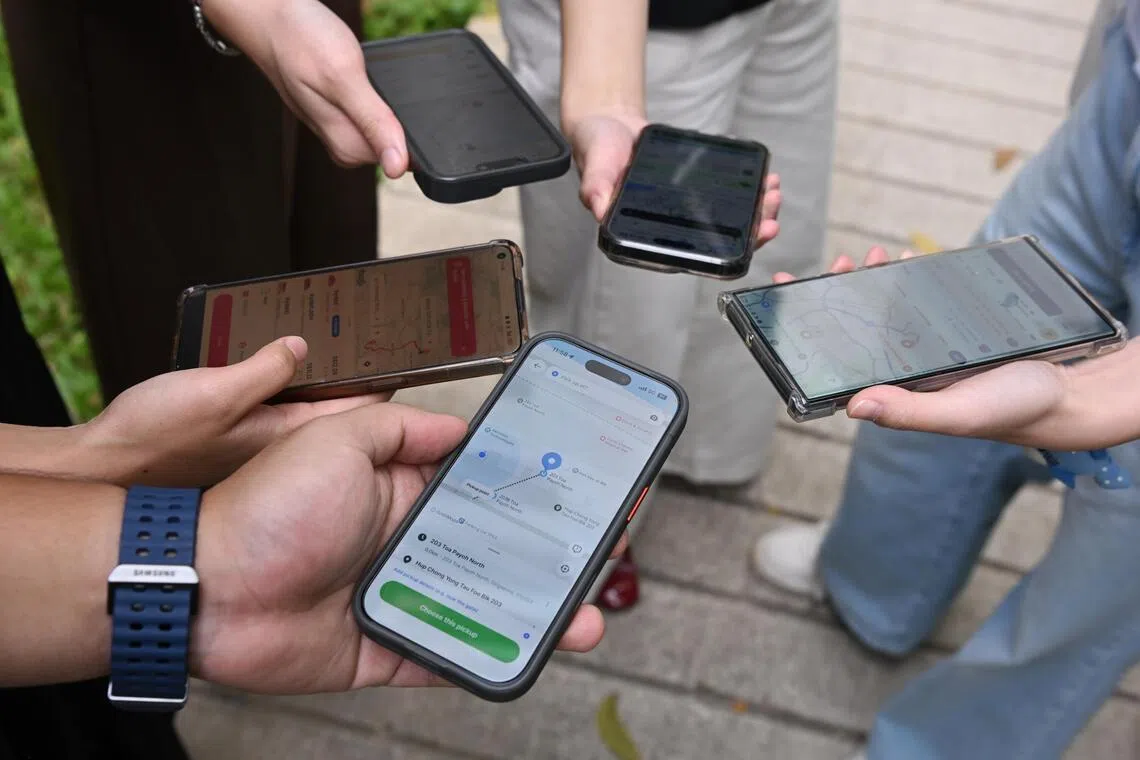
So anyway, The Straits Times—bless them, really—decided to actually look into this. They spent three days testing five different ride-hailing apps side by side. Grab, Gojek, Tada, Ryde, ComfortDelGro. The whole gang. Their mission? Figure out which one actually gives you decent value now that platform fees have quietly crept up on all of us. And honestly? It's about damn time someone did this.
Because those fees? They just keep climbing. Slowly. Quietly. Like they're hoping we won't notice. But we notice.
What Even Is a Platform Fee?
Let's back up for a second. A platform fee is basically that extra charge they tack on top of your fare. Officially, it's supposed to cover app development, maintenance, customer support, safety features—maybe even a little something for the drivers. That's the story, anyway.
But here's what nobody tells you: why does it keep going up?
I mean sure, costs rise everywhere. Fuel's more expensive. Maintaining a fleet isn't cheap. Inflation's a thing. But there's also this whole supply-and-demand dance with drivers. If there aren't enough of them on the road during peak hours, companies have to offer better incentives to get them out there. And guess who ends up covering that? Yeah. Us.
Or maybe—call me cynical—they're just squeezing a little more profit out of us. I mean, they're businesses. That's what businesses do.
The Straits Times study, from what I gathered skimming it over coffee, took a pretty practical approach. They actually booked rides. Different times of day, different routes, all five apps. Because here's the thing about algorithms: they're weird. You can check the same route at the same time on two different apps and get completely different prices. It's honestly kind of a lottery.
Which makes you wonder—how do these algorithms really work? Are they genuinely smart, or are they just really good at figuring out the maximum we're willing to pay? We've talked before about how AI has completely changed the game across pretty much every industry, and ride-hailing is no exception. That surge pricing you hate? It's not random. It's AI, analyzing supply and demand in real time, deciding exactly when to hit you with that 2x multiplier.
Kinda creepy when you think about it.
A Quick Story From My Own Wallet
So there I was, one rainy Tuesday. Running late for a meeting—nothing new there—and I needed to get across town fast. Opened Grab: $25 for a 15-minute ride. Uh, no thanks. Switched to Gojek: $22. Still felt like a lot. Then I remembered Tada. I'd downloaded it months ago and basically forgotten about it. Checked the fare: $18. Done.
Was it a huge saving? Not really. But it felt like a small win. Like I'd outsmarted the system somehow. And honestly, that little dance between apps—checking this one, then that one, trying to find the best price—has become such a routine thing. It's almost a game at this point.
The ST report basically confirmed what I'd been feeling: there's no single app that's cheapest all the time. Grab, which everyone assumes is the most expensive because they kind of own the market, actually came in cheaper on some routes during off-peak hours. But then on others, Tada or Ryde would swoop in with something more affordable. And ComfortDelGro? Solid pricing, but sometimes you'd wait a little longer for a ride.
It's complicated. The final number you see isn't just about distance. It's surge pricing, it's promotions, it's platform fees—some apps bundle them, some break them out. It's a lot to keep track of when you're just trying to get somewhere on time.
The Good, the Bad, and the Whole Algorithm Thing
So what does this mean for us, the people just trying to get around?
Honestly? It means we have to be a little smarter about it. Blind loyalty to one app is kind of a luxury now. Price comparison isn't just for flights and hotels anymore—it's for getting to work. Yeah, it adds a few extra seconds to booking a ride. But those seconds can save you a couple of bucks, and that adds up. Plus, a little competition between apps is good for everyone, right?
For drivers, though, it's a different story. Higher platform fees usually mean they take home a smaller cut, unless the total fare goes up enough to balance it. Some apps try to make up for it with incentives, but it's a constant balancing act. Drivers are out there working long hours just to make a living, and every percentage point matters. If too many of them feel squeezed and leave the platform, then there are fewer rides available, and we're all stuck waiting longer. It's one of those cycles that just keeps feeding itself.
The whole platform fee thing also says something about where the market's at. The early days—when venture capital was basically subsidizing all our cheap rides—are pretty much over. Now it's all about profitability. And yeah, that means we end up paying more. It's not necessarily evil, it's just… business. But it still stings a little.
This push for efficiency and sustainability isn't just happening in transportation, though. You see it everywhere. Even in medicine, AI is being used to tackle incredibly complex problems. It's wild to think about how AI is changing the way we discover new drugs—not just to make money, but to actually find cures faster. Same technology, completely different purpose. Kind of puts things in perspective.
And let's be honest—this isn't just about markets maturing. It's also about market power. When one or two companies dominate, they can pretty much set the rules. That's why new players like Tada and Ryde—and even the old-school taxi companies with their modern apps—matter. They keep everyone else honest. They force the big guys to at least pretend they care about giving you a fair price.
Making Sense of the Ride-Hailing Maze
At the end of the day, the Straits Times report just confirms what most of us already suspected: there's no magic bullet. The "best" app depends on the time, the route, the demand, and whatever random promotion happens to be running. The takeaway? Be flexible. Keep a couple apps on your phone. Take five seconds to compare before you hit confirm.
Yeah, it's a little extra effort. But with everything else getting more expensive, it's one small way to feel like you've got some control over your own wallet. We're not just paying for a ride anymore—we're paying for the convenience, the technology that connects us to drivers, and all those behind-the-scenes costs that keep a smart city running.
Speaking of which, it's pretty fascinating how data and AI are being used to tackle other city problems too. Like, take a look at how smart waste management systems are quietly solving one of the grossest urban challenges. Same tech, totally different problem. Kind of cool when you think about it.
🚀 Tech Discussion:
So what's your move these days? You loyal to one app, or do you shop around? Have you noticed prices creeping up lately—especially with all those platform fees? And honestly, how much is "convenience" actually worth to you?
— TechPulse