
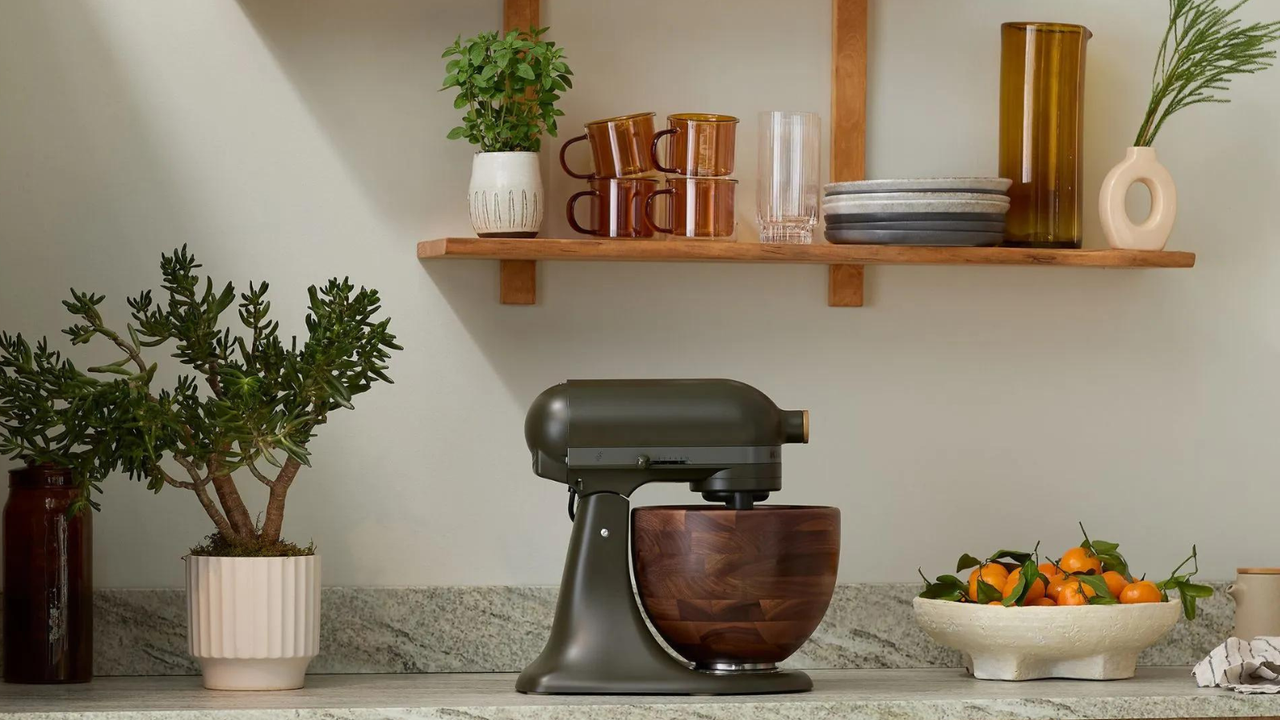
KitchenAid stand mixers have earned a near-legendary reputation in kitchens around the world. They’re built like tanks, they mix with that signature planetary motion, and for many people, they feel like a once-in-a-lifetime purchase. But here’s the part that surprises new owners — even these heavy-duty machines sometimes leave a frustrating layer of dry, unmixed ingredients sitting at the bottom of the bowl.
This usually isn’t a motor issue or a major mechanical failure. In most cases, it comes down to something much smaller: calibration. And that’s where the famous “dime trick” comes in. It’s simple, almost laughably low-tech, yet widely trusted by experienced bakers. No special tools. No service appointment. Just a small adjustment that can make a mixer feel brand new again.
The Hidden Issue: Beater Clearance and Real Mixing Performance
The core issue usually isn’t a design flaw. It’s more about the tiny gap between the beater and the bowl. Over time — through normal use, shipping vibration, or manufacturing tolerance differences — the beater can sit slightly higher than ideal.
That tiny difference matters more than most people expect. When the beater sits too high, it misses ingredients that settle at the very bottom. The planetary mixing system is designed to sweep everything together, but if the clearance is off, flour or sugar can just sit there. The result is those annoying dry pockets that force you to stop, scrape, and mix again.
It’s a small mechanical misalignment, but in real baking situations, it can seriously affect consistency and results.
The “Dime Trick”: Simple Physics, Smart Adjustment
How the Calibration Actually Works
The idea behind the dime trick is beautifully straightforward. You place a standard U.S. dime flat on the bottom of an empty mixing bowl. With the mixer unplugged and turned off, you lower the flat beater into position.
What you’re aiming for is very specific. The beater should just barely touch the dime — enough to gently move it around the bowl. Not trap it. Not grind it. Just push it slightly. That movement usually means the clearance is close to ideal, roughly around the thickness of the coin itself.
Most mixers include an adjustment screw near the mixer head. Turning it slightly changes the beater height. Small turns make a big difference. The coin acts like a simple physical measuring tool, giving instant feedback without guesswork.
Why This Works So Well From an Engineering Perspective
From a design standpoint, this solution is surprisingly elegant. A coin becomes a measurement reference because its thickness is consistent and widely standardized. No need for precision gauges or specialized tools.
It also highlights something easy to overlook: good product design often includes hidden serviceability. The mixer wasn’t marketed as “coin-calibrated,” but the adjustment system allows normal users to make fine mechanical corrections using something they already have at home.
Bigger Meaning: Repair Culture and User Control
The dime trick is more than a baking tip. It’s a small example of user empowerment. Instead of paying for service, shipping heavy equipment, or replacing something that still works, people can fix a performance issue themselves in minutes.
That extends product lifespan, reduces waste, and builds confidence. You feel like you understand your tool instead of being locked out of it.
It also shows how community knowledge spreads. Tips like this usually come from experienced users, technicians, or long-time bakers, then spread through forums, videos, and social posts. In many cases, real-world shared experience ends up being more practical than official troubleshooting guides.
For manufacturers, there’s a quiet lesson here. Even as devices become more electronic and sealed, mechanical fundamentals still matter. Designing products with small, accessible adjustments can dramatically improve long-term satisfaction.
Final Thoughts
The KitchenAid dime trick isn’t just a clever hack. It’s proof that understanding basic mechanics — paired with everyday objects — can solve problems that feel much bigger than they are.
Sometimes the most satisfying fix isn’t complicated, expensive, or high-tech. Sometimes it’s literally sitting in your pocket.
This example shows how simple mechanical knowledge, combined with common objects, can solve real-world problems without complexity. It also reflects broader ideas about repairability, smart design, and giving users more control over the tools they depend on.