
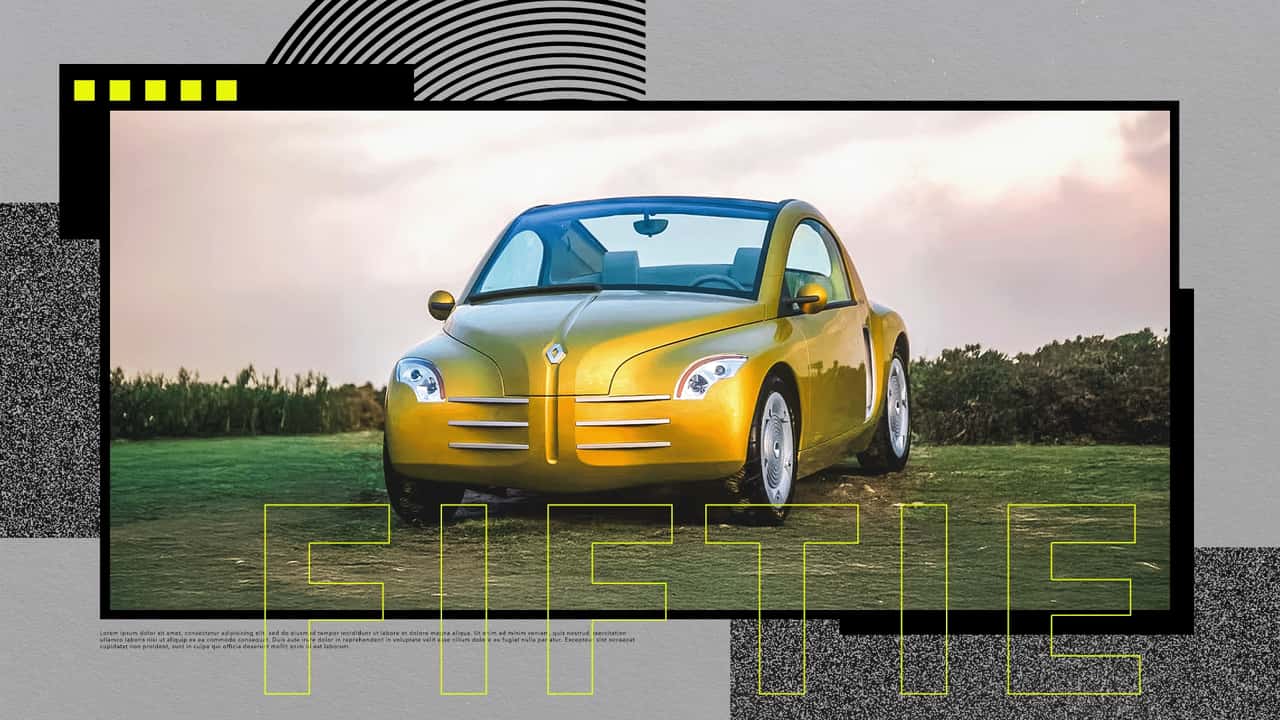
Alright, so picture this: it’s late, I’m probably on my third cup of lukewarm coffee, scrolling through some obscure automotive design blogs. You know, the usual. And then it hits me. A flash of something utterly brilliant, completely bonkers, and just… *right*. It was a forgotten Renault concept car, and honestly, it knocked my socks off. We're talking about a quirky little hatchback with a removable roof, built on the bones of one of Renault's most radical cars ever. And it absolutely, unequivocally *nailed* the retro revival trend years before it really took off.
It made me wonder, doesn't it make you wonder? Why do we sometimes forget the absolute gems that pop up in concept form? These aren't just flights of fancy from designers; they're often pure distillations of what a brand *could* be, or even *should* be. This particular Renault, it just had that spark. That 'je ne sais quoi,' as they say. (Forgive my French, it's about as good as my ability to remember where I left my car keys.)
The Allure of the 'Forgotten' Concept
Let's talk about the specific beast for a moment, without getting too bogged down in model numbers because, frankly, the impact is what matters. This wasn't some timid rehash. No, this concept car was a bold statement, drawing inspiration from a truly groundbreaking, some might say *revolutionary*, Renault model from yesteryear. Think about the cars that genuinely pushed boundaries. The ones that made people go, 'Wait, you can *do* that with a car?'
And then imagine taking that spirit – that audacity – and infusing it into something new, something modern, but with an unmistakable nod to its heritage. That's what this forgotten concept did. It wasn't just slapping some vintage badges on a bland modern chassis. Oh no. This was a deep dive into the very *ethos* of what made that original radical car so special. It was about proportions. It was about attitude. And yeah, it was about a removable roof, because who doesn't love a bit of open-air motoring, especially in a compact, city-friendly package?
The retro revival. It's a funny thing, isn't it? We see it everywhere now. In fashion, in music, definitely in cars. Mini Coopers, Fiat 500s, the upcoming VW ID.Buzz – they all tap into that well of nostalgia. But many of them, bless their cotton socks, feel a bit… safe. A bit manufactured. They capture the *look*, sure, but do they capture the *spirit*? Sometimes, I'm not so sure. This Renault concept, however, felt different. It felt like it genuinely understood the assignment. It wasn't just a costume; it was a reincarnation.
More Than Just Skin Deep: Why This One Stood Out
So, what made it so special? Well, for one, the quirky hatchback form factor. In an era where SUVs dominate, a genuinely interesting, compact hatchback feels like a breath of fresh air. It’s practical, it’s nimble, and done right, it can be incredibly stylish. Plus, the removable roof. That’s a commitment to fun, right there. It transforms the car, changes its whole personality. From practical commuter to weekend cruiser with the wind in your hair – or what's left of it, in my case.
But the real genius, I think, lay in its foundation. Basing it on one of Renault's most radical cars. That’s key. It gave the concept instant credibility, a lineage of boldness. It wasn't trying to invent heritage; it was *inheriting* it. That’s a subtle but crucial difference. It’s the difference between a cover band and a genuine artist paying homage to their roots.
I remember seeing a similar attempt from another brand a few years back – won't name names, but it involved a beloved classic being reimagined as an electric car. And while the intentions were good, it just felt… bloated. Overly complicated. It lost that essential lightness, that simplicity that made the original so endearing. This Renault, though? It seemed to strike that balance perfectly. Modern tech, sure, but wrapped in a package that felt genuinely connected to its roots, not just superficially.
The 'Could Have Been' and the 'Should Have Been'
This brings us to the thorny question: if it was so brilliant, why didn't it happen? Why did it remain a concept, gathering digital dust in some forgotten corner of the internet? The usual suspects, I suppose. Production costs. Market research suggesting SUVs were the only way forward. The terrifying tightrope walk between concept car whimsy and real-world homologation and safety standards. It’s tough, I get it.
But part of me, the slightly jaded, always-wanting-more-excitement part of me, thinks it’s also a lack of courage. Automakers often play it safe. They chase trends rather than set them. And while that's understandable from a business perspective – shareholders, profits, all that jazz – it often results in a sea of sameness. Blandness. Cars that are perfectly competent, perfectly efficient, but utterly devoid of soul. This Renault concept had soul. It really did.
Imagine if it *had* gone into production. What an impact it could have had! It could have been a beacon for how to do retro *right*. A lesson in blending heritage with innovation without losing that essential spark. It wouldn't have been a mass-market car, probably. But it would have been a halo car, a statement car, something that made people excited about Renault again, beyond just their sensible hatchbacks and Dacias (no offense to Dacia, they're great at what they do, just… different).
The Future of Retro: A Tightrope Walk
So, where does this leave us with the whole retro revival thing? It’s not going away, that’s for sure. As technology marches on, and cars become increasingly digitized and, dare I say, autonomous, there's a growing yearning for simplicity, for character, for something tangible and fun. The trick, and this Renault concept showed the way, is to understand *why* the original was loved, not just *what* it looked like.
It’s about capturing the essence, the emotion, the joy. It's about being brave enough to be quirky, to be different, even if it means not appealing to absolutely everyone. Because the cars that truly resonate, the ones that become classics, are often the ones that dared to be unique. They’re the ones that took a risk. And boy, did this forgotten Renault concept embrace that risk.
It reminds us that innovation isn't always about the newest gadget or the most powerful electric motor. Sometimes, it's about looking back, understanding what made things great, and bringing that spirit forward in a way that feels fresh and relevant. It's about remembering that cars, at their best, are more than just appliances. They're expressions. They're fun. And they should make you smile.
And as I pour myself another half-hearted cup of coffee, I can't help but think about all the other brilliant concepts gathering dust. The ones that could have, should have, changed the game. Ah, well. A tech writer can dream, right?
🚀 Tech Discussion:
So, what forgotten concept car do *you* think absolutely nailed a trend before its time, and why do you think it never saw the light of day? Let's talk about the 'what ifs' of automotive history!
Generated by TechPulse AI Engine