
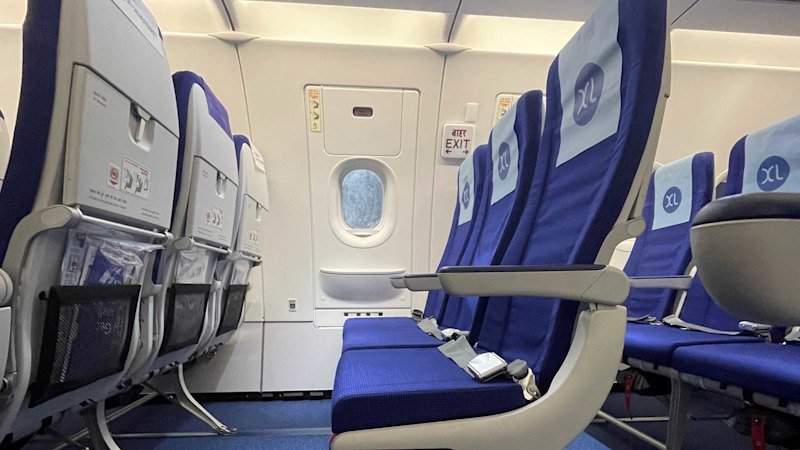
Alright, hands up if you've ever boarded a flight, squeezed into your economy seat, and thought, 'Wait a minute, did this seat get... smaller? Or am I just getting wider?'
No, it's probably not you. Well, okay, maybe a *little* bit you, after that extra slice of pizza last night (no judgment, we've all been there). But mostly, it's the airlines. They've been on a mission, a quiet, subtle, and frankly, rather uncomfortable mission: trading seat padding for space. And it's not just the budget carriers anymore. We're talking mainstream, big-name airlines here, folks. My knees are already protesting just thinking about it.
The Inch-by-Inch Battle: Why Every Millimeter Counts
It sounds trivial, doesn't it? A few millimeters here, an inch there. But when you’re cramming hundreds of people into a metal tube flying at 30,000 feet, every single one of those millimeters adds up. For airlines, that 'adding up' usually translates to one thing: more revenue. More seats on a plane means more tickets sold per flight. Simple math, really. Or, if they don't add more seats, it means they can offer slightly more legroom (pitch) to *some* passengers, which they then brand as 'economy plus' or 'extra comfort' and charge you a premium for. Sneaky, right?
This isn't some grand conspiracy theory, by the way. This is just good old-fashioned economics meeting some very clever engineering. The core of this seat shrinkage phenomenon? Slimline seats. These aren't just seats with less fluff; they're a marvel of modern design, in a way. Just... not always a marvel of modern comfort. They're designed to take up less physical space, both in terms of seat back thickness and often, a reduced footprint on the floor.
Deconstructing the Slimline Seat: Less Foam, More Tech
So, what exactly are these slimline seats made of? Gone are the days of plush, overstuffed cushions. Now, we're talking about advanced composites, lighter metals, and often, tensioned fabric or mesh instead of traditional foam padding. Think about some modern office chairs – those ergonomic ones that look like they're barely there but somehow support you? It's a bit like that, but for a plane, with slightly less adjustability (read: none).
The materials are lighter, too, which is a huge deal. A lighter plane burns less fuel. Less fuel means lower operating costs for the airline, and, theoretically, a smaller carbon footprint. That's a 'good' thing, right? Fuel efficiency is critical for airlines, and if they can shave off a few hundred pounds by redesigning every single seat, that's a significant saving over thousands of flights.
They’ve also optimized the seat back itself. Instead of a thick, rigid structure, newer designs often curve inwards at the bottom, creating more knee room for the person behind. It's an optical illusion, almost. You *feel* like you have more space because your knees aren't jammed, even if the actual distance between your seat and the one in front hasn't increased dramatically. It’s clever. Annoyingly clever, if you ask me.
My Own Tale of Woe (and Wonder)
I remember flying on a particular budget airline a few years back – won't name names, but let's just say their color scheme was quite vibrant. The seats were... utilitarian. I’m not sure there was even any foam. It felt like I was sitting on a highly stretched piece of glorified plastic. The seat back was so thin, I could feel every ripple of the magazine stored in the pocket of the person in front of me. Every. Single. Ripple. I even made eye contact with their elbow through the gap at one point. Surreal.
But then, I flew on a newer plane from a major international carrier, and while the seat wasn't 'plush' in the old sense, it was surprisingly comfortable for its slim profile. The design team clearly put some serious thought into ergonomics. It wasn't just less padding; it was *smart* padding, strategically placed, with a supportive structure that cradled the lower back. So, yeah, 'not all slimline seats are equal' is a huge understatement. Some are engineered marvels; others feel like they're actively trying to punish you for choosing economy.
The Ripple Effect: Beyond Your Posterior
This shift isn't just about your aching posterior or your cramped knees. It has broader implications, for everyone involved. For airlines, the benefits are clear: increased capacity, reduced fuel costs, and faster cleaning times because there are fewer nooks and crannies for crumbs to hide. (Trust me, as someone who once found a petrified piece of something unidentifiable under a seat, this is a real win for cleaning crews).
For us, the passengers, it's a mixed bag. On one hand, the environmental benefits of lighter planes are real. Reduced emissions are something we should all care about. Plus, if these lighter planes translate to cheaper airfares (a big 'if,' I know, but theoretically possible), then that's a benefit. On the other hand, comfort. Long-haul flights can become endurance tests. The psychological impact of feeling crammed in can exacerbate travel stress. And let's not even get started on the potential for 'air rage' incidents that might be subtly fueled by a lack of personal space.
There's also the question of accessibility. Thinner seats mean narrower aisles, potentially making it harder for passengers with mobility issues or those needing assistance. It's a balancing act, isn't it? Innovation that pushes boundaries, but sometimes forgets the human element at its core.
I mean, the tech is genuinely impressive. The materials science, the structural engineering, the ability to create seats that are incredibly strong yet feather-light and wafer-thin – that's something to applaud. But when that tech is primarily leveraged to fit *more* people into the same space, rather than to make the existing space more enjoyable, well, that's where my mild self-correction kicks in. Actually, it's not even a self-correction, it's just me being a bit cynical. We're getting the 'innovation' but at what cost to our comfort? It feels like we're increasingly getting the short end of the stick, or rather, the short end of the seat cushion.
So, next time you settle into your economy seat and wonder if your posterior has suddenly expanded, take a closer look. You might just be experiencing the cutting edge of airline economics – where every inch, every ounce, and every last shred of foam is a calculated decision. And sometimes, it just feels like we're the ones paying the real price for that optimization.
🚀 Tech Discussion:
Given this trend, what do you think is the breaking point for passenger comfort in economy class? Will we eventually see a backlash, or is this simply the new normal we'll all have to get used to?
Generated by TechPulse AI Engine