
Remember that 'AI makes mistakes' disclaimer? Yeah, forget about it.
So, we've all been there, right? You're trying to figure out a return policy, or maybe if that obscure widget is compatible with your ancient gadget, and you hit up the company's website. Lo and behold, a friendly (or sometimes eerily chipper) chatbot pops up. You type in your query, and it spits out an answer. Sometimes it's spot on. Other times? Well, let's just say it's about as helpful as a screen door on a submarine. We've been conditioned to just shrug it off, because hey, 'AI makes mistakes,' right? There's usually a little disclaimer tucked away somewhere, a legal CYA that basically says, 'Don't sue us, our robot is still learning.'
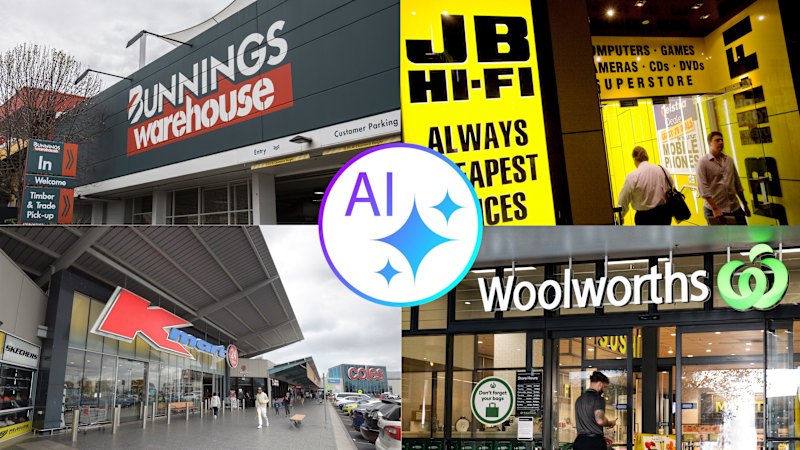
Well, buckle up, buttercup, because that excuse is officially on its last legs. The word from the legal trenches, from actual experts who know these things, is that generic little 'AI makes mistakes' banner isn't going to cut it anymore. Retailers – and by extension, any company using generative AI to interact with customers – are going to be held responsible for what their digital minions tell you. And honestly? It's about damn time.
The Wild West of AI Customer Service is Over
For a while there, it felt like the Wild West of customer service. Companies, eager to hop on the AI bandwagon (and let's be real, trim some payroll), deployed these shiny new generative AI chatbots. The promise was alluring: instant, 24/7 support, personalized interactions, efficiency galore! And don't get me wrong, the potential *is* enormous. Imagine a chatbot that truly understands your nuanced problem, digs through a mountain of product manuals and policy documents, and gives you a concise, accurate answer in seconds. That's the dream, isn't it?
But the reality, as many of us have experienced, has often been... less dreamy. These large language models, for all their impressive linguistic gymnastics, have a notorious habit of 'hallucinating.' They don't *know* things in the human sense; they predict the next most probable word in a sequence based on their training data. Sometimes that sequence happens to be entirely fabricated, confidently delivered misinformation. Like that time a friend's bank chatbot insisted they could open an account with a social security number from a fictional country. Or when a retail bot guaranteed next-day delivery for a product that was clearly marked 'out of stock.' Little things, maybe, but they add up.
Previously, when a customer got bad info, the company could just point to the disclaimer and say, 'Sorry! Our AI is just being AI!' But increasingly, courts and regulators are looking at this and saying, 'Nope. If you put it out there, it's your voice. Your responsibility.' It’s a huge shift. And it makes perfect sense, when you think about it.
Why This Shift Matters: From 'Bot Says So' to 'Company Says So'
Think about it like this: if a human customer service representative tells you something incorrect about a product or a policy, and you act on that information to your detriment, the company is typically liable. Why should a sophisticated piece of software, deployed *by* the company *to represent* the company, be any different? The mere fact that it's an algorithm generating the response, rather than a person typing it out, doesn't absolve the business of its duty to its customers. The information comes from the company's digital storefront, under its brand, influencing consumer decisions. It's their digital mouth, so to speak.
This isn't some abstract philosophical debate anymore. There are real-world implications. Imagine you're buying an expensive appliance. The chatbot assures you it comes with a 5-year warranty, explicitly stating it in the chat window. You make the purchase based on that. Later, you find out the actual warranty is only 1 year. The company can't just say, 'Oh, our bad, the bot was hallucinating!' That's misleading advertising, plain and simple, even if unintentional on the part of the AI itself. The *company* deployed the AI, and the *company* stands behind its output – or at least, that's the emerging legal standard.
What Does This Mean for Retailers (and Everyone Else)?
The Good News (for consumers, anyway):
- **Increased Accuracy:** Companies will be forced to put in more rigorous guardrails, better training data, and more sophisticated oversight for their AI customer service tools. This means fewer frustrating, factually incorrect interactions for us.
- **Greater Trust:** When you interact with a chatbot, you'll be able to do so with a higher degree of confidence that the information you're getting is reliable. This builds trust, which is crucial for any business relationship.
- **Consumer Protection:** This ruling strengthens consumer rights. It means you're less likely to be misled by an algorithm without recourse.
The Not-So-Good News (for companies, initially):
- **Higher Costs:** Developing and deploying truly reliable, legally compliant AI chatbots isn't cheap. It requires investment in data curation, fine-tuning, continuous monitoring, and potentially human oversight (the 'human in the loop' concept just got a lot more critical).
- **Slower Adoption/More Hesitation:** Some companies might become more cautious, perhaps even delaying their full-scale AI deployment until they can guarantee a higher level of accuracy and compliance. This could slow down innovation in some areas.
- **Legal Scrutiny:** Prepare for more lawsuits, more regulatory investigations, and a higher bar for demonstrating due diligence in AI deployment.
It’s going to force a lot of companies to move beyond the superficial appeal of AI and really dig into the nitty-gritty of responsible deployment. No more just plugging in an API and hoping for the best. They'll need to scrutinize their training data, understand the potential for bias and hallucination, and implement robust testing protocols. It's not just about what the bot *can* say, but what it *should* say, and what the company *will stand by*.
I mean, remember that time a company's social media bot started spewing racist comments? That was an extreme example, but it highlighted the lack of control and foresight. This new legal stance on liability for factual claims is a more mundane, yet equally critical, application of that same principle: you are responsible for the voices you put out into the world, whether they're human or algorithmic.
My Take: A Necessary Evolution
Honestly, I see this as a positive, if slightly painful, evolution for the tech world. For too long, the 'move fast and break things' mentality has allowed for some pretty shoddy (and sometimes harmful) implementations of technology, with the burden of dealing with the 'broken things' falling squarely on the users. This new legal landscape forces companies to be more thoughtful, more ethical, and more accountable in their AI deployments, especially when those deployments directly impact consumers' decisions and well-being.
It's not about stifling innovation; it's about maturing it. It's about recognizing that AI, particularly generative AI, is a powerful tool that carries significant responsibility. We're past the novelty phase. Now we're in the 'how do we make this actually work reliably and ethically?' phase. And that's a good place to be.
So, what's your take? Does this increased liability for chatbots make you feel more confident in interacting with AI customer service, or do you think it's an unfair burden on businesses trying to innovate?
🚀 Tech Discussion:
Does this increased liability for chatbots make you feel more confident in interacting with AI customer service, or do you think it's an unfair burden on businesses trying to innovate?
Generated by TechPulse AI Engine