
Alright, so we live in a world obsessed with screens, right? Everything's gotta be digital, instantly updated, streaming, buzzing. You’ve got your smartwatches, your smart homes, your smart everything. And honestly, a lot of it is genuinely amazing. But sometimes, just sometimes, I stumble upon a story that makes me pause and think, 'Wait a minute. What if the *real* magic isn't always happening on a pixelated display?'
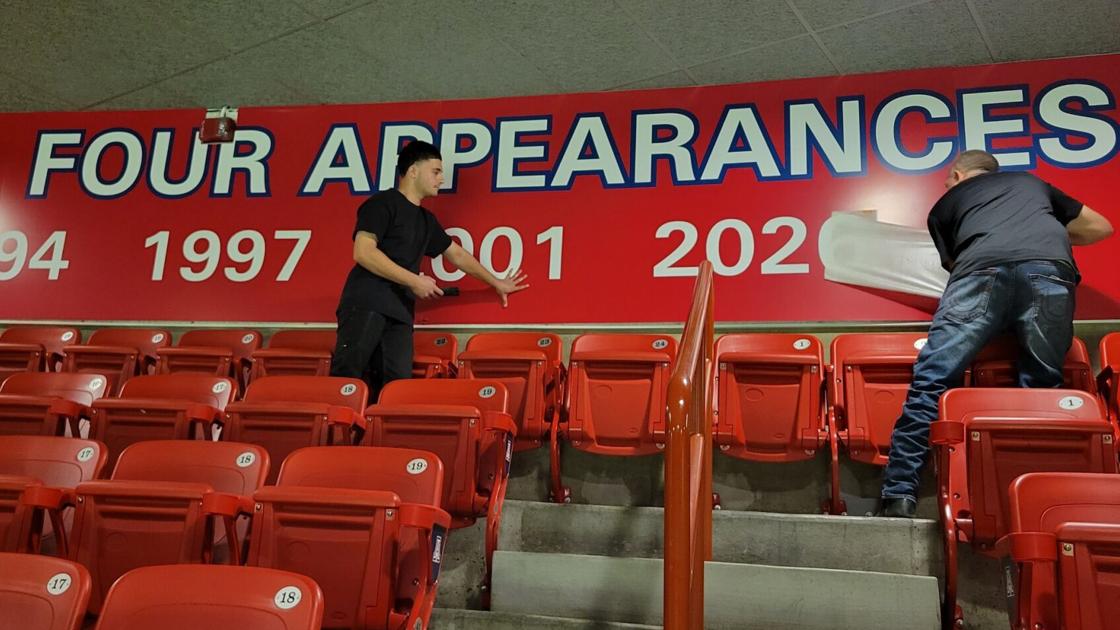
This gem popped up in my feed recently: a Tucson graphics business, specifically a dedicated signmaker, who’s made it their mission to rapidly update the physical displays inside McKale Center. You know, the home of the Arizona Wildcats men's basketball team. Every time they hit a new tournament milestone – an Elite Eight, a Final Four appearance – this person, this team, springs into action. Quickly. Like, really, really quickly.
And my first thought? Isn't there just a giant LED screen for that? A quick software push, a flick of a button, and *poof*, 'Sweet Sixteen' changes to 'Elite Eight.' But no. This isn't that. This is different. This is a story about a human being, a craftsperson, performing what I'm calling 'analog magic' in a decidedly digital-first world. And honestly, it’s kind of refreshing, isn't it?
The Human Algorithm: Speed, Precision, and Sweat
Let's unpack what's actually happening here. When the Wildcats clinch a big win, there's a very real, very physical transformation that needs to happen at McKale Center. We're talking about banners, signs, maybe even court-side graphics that celebrate their progress. And this isn't some generic placeholder. This needs to be perfect. The right font, the exact shade of Wildcat red, the precise placement. All while the adrenaline is still pumping, the fans are celebrating, and before the next round of media coverage or, heaven forbid, the next home game or event. The pressure is real.
This isn't just about printing a new sign. No, no, no. This is about a highly optimized, human-driven workflow. Think about it: the moment that final buzzer sounds, someone probably gets a call. 'They did it! Get the Elite Eight banner ready!' Then it's a scramble. Design verification, perhaps a final print run, careful cutting, maybe even lamination. Then, the logistics of getting it to the arena, installing it flawlessly, often at height, and making sure it looks absolutely pristine. It's a whole dance, a carefully choreographed ballet of graphics production and installation.
You might be thinking, 'Is this really 'tech' though?' And I'd argue, absolutely. Technology isn't just about microchips and AI. It's about applied science and engineering to solve practical problems. In this case, the 'tech' is the *system* developed by this signmaker: a system for rapid response, custom fabrication, quality control, and efficient deployment. It's a testament to process optimization, just with a very human, very hands-on interface. It's a high-touch, low-latency solution that bypasses all the potential network issues or software glitches that a purely digital display might face. No Wi-Fi needed. Just skill.
Why Not Just a Bigger Screen?
This is where my curiosity really piqued. Why stick with physical displays for these key celebratory moments? Cost, sure, could be a factor. A massive, high-resolution LED wall that could seamlessly transition between 'Sweet Sixteen' and 'Elite Eight' is a significant investment, both upfront and in ongoing maintenance. But I think there's more to it than just budget. There's an aesthetic, a tactile quality to a physical banner that a screen, no matter how good, can't quite replicate.
A physical banner, especially one that commemorates a hard-won victory, carries a certain weight. It feels more permanent, more tangible. It’s a piece of history you can (almost) reach out and touch. For a storied institution like McKale Center, there's likely a deep appreciation for tradition and the physical representation of achievement. Plus, let's be honest, sometimes a well-designed, perfectly placed physical graphic just *looks* better than a screen in certain architectural contexts. It becomes part of the building's fabric, not just an overlay.
I remember visiting an old stadium once – not quite as grand as McKale, but it had this similar charm. Every achievement, every record broken, was commemorated on these beautiful, hand-painted boards. It felt authentic. It felt like history. And while I’m all for shiny new tech, there’s something about that tangible connection that digital often misses. This signmaker is essentially preserving that, even in a modern, fast-paced sports environment. It’s really quite cool.
Implications: The Unsung Value of Specialized Craft
This seemingly simple story actually has broader implications for how we view technology and specialized skills. In our rush towards automation and AI, we sometimes forget the immense value of human expertise, especially when it's honed for a very specific, high-stakes task. This isn't just a general print shop; this is a business that understands the specific needs, time constraints, and aesthetic requirements of a major sports venue. That's a niche, and it's incredibly valuable.
Firstly, it highlights the reliability factor. No software bugs to patch, no server downtime, no pixelated glitches. Just good old-fashioned human skill and materials. When you absolutely, positively need that banner up and looking perfect, a dedicated human team might just be more dependable than a complex digital system that could fail in a hundred different ways. It’s about trust, really – trust in a person, in a process.
Also, it's a fantastic example of supporting local businesses. This isn't a multinational corporation handling the updates; it's a local Tucson graphics business. That keeps money in the community, fosters local talent, and builds a relationship that goes beyond a simple transaction. There's likely a deep sense of pride for this signmaker, being an integral, if unseen, part of the Wildcats' journey.
Now, it's not without its challenges, of course. Scalability could be an issue if every aspect of the arena's signage needed this kind of rapid, physical update. And what if the primary signmaker is sick? Or on vacation? Dependency on key personnel is always a consideration for any specialized service. But for these crucial, milestone-driven updates, it seems like the human touch, the specialized craft, is winning out.
So, What's Your Take?
This whole thing makes me wonder if we’re sometimes too quick to dismiss analog solutions in favor of digital ones, without fully appreciating the unique advantages they offer. Is there a sweet spot, a perfect blend where traditional craftsmanship meets modern demands? This Tucson signmaker seems to have found it, turning high-pressure deadlines into moments of analog magic. It’s a powerful reminder that sometimes, the most effective 'tech' solution isn't the one with the most lines of code, but the one with the most dedicated human touch. What do you think? Are we overlooking these 'human algorithms' in our tech-first world?
🚀 Tech Discussion:
Are we too quick to dismiss analog solutions in favor of digital ones, without fully appreciating the unique advantages they offer? And what 'human algorithms' do you see making a difference in unexpected places?
Generated by TechPulse AI Engine