The AI Gold Rush: Why 'Jobs and Investment' Isn't Always a Green Light for Data Centers

Alright, so picture this: you hear about a shiny new tech development rolling into town. Something big. Something with 'AI' in the name, which, let's be honest, immediately conjures images of futuristic silicon valleys, brilliant minds, and, of course, high-paying jobs. It’s the dream, right? Economic boom time. Everyone wins.

Except, well, sometimes it’s not quite that simple. And that’s exactly what seems to be playing out in a place called Armour Township, within Ontario’s Almaguin Highlands. They're looking at a proposed AI data center, and while the developers are waving the banner of 'major investment' and 'high-paying tech jobs' (and who wouldn't want those?), the local council? They're hitting the brakes. Hard. They want to study potential noise and land-use impacts. And honestly, good for them. It’s a conversation we all need to be having, not just in small townships but everywhere these digital behemoths decide to plant their flag.

So, What Even *Is* an AI Data Center?

Before we dive too deep into the local politics, let's just quickly touch on what we're actually talking about here. When you hear 'AI data center,' don't just think of your typical server farm, humming away quietly in some industrial park. No, no. These are a different beast entirely. We're talking about facilities packed, absolutely crammed, with specialized hardware. Think GPUs – graphics processing units – but not just for making pretty video games. These are the workhorses for crunching unimaginable amounts of data, training complex AI models, running simulations, and making all those smart assistants and recommendation engines actually *smart*.

And these GPUs? They generate heat. A LOT of heat. Which means they need serious, industrial-grade cooling systems. We're talking massive fans, intricate liquid cooling setups, sometimes even direct-to-chip cooling solutions. All of this requires an enormous amount of electricity, obviously. And, crucially for Armour Township, it makes a heck of a lot of noise. A constant, low-frequency hum, often described as a jet engine at idle, or a massive industrial fan running 24/7. Not exactly the soothing sound of nature you might expect in the Almaguin Highlands, right?

The Allure of the 'AI Boom'

It's easy to see why a community, especially a smaller one, would be tempted. 'High-paying tech jobs'? That's gold. It's the kind of thing that can keep young people from leaving for bigger cities, can bring new families in, can revitalize local economies. And 'major investment'? That means property taxes, infrastructure upgrades, maybe even community sponsorships. It paints a picture of progress, of being at the cutting edge. It sounds like a no-brainer. A win-win, even.

I remember talking to a friend who lives near a smaller data center, not even an AI-focused one, and the local government was so thrilled at the prospect. They promised dozens of new jobs. Turns out, once it was built and operational, the number of *direct* jobs was pretty minimal – a handful of highly skilled technicians, maybe some security personnel. Most of the construction jobs were temporary, as expected. The ongoing operational jobs? Not nearly as many as initially touted. It's a common story, actually. These facilities, once built, are often highly automated. They’re not manufacturing plants requiring hundreds of hands-on workers.

The Council's Caution: More Than Just 'NIMBYism'

So, when Armour Township’s council urges caution, it’s not necessarily a knee-jerk 'Not In My Backyard' reaction, though I'm sure some folks will label it that. This is about due diligence. This is about understanding the *true* cost and impact, not just the glossy brochure version. They're looking at noise, which can seriously affect quality of life for nearby residents. Imagine trying to enjoy a quiet evening on your porch with that constant hum in the background. Or trying to sleep. It's a big deal.

Then there's the land-use impact. Where does it go? How much land does it gobble up? Is it replacing natural areas? Is it disrupting existing community plans? And what about the infrastructure? These places need massive power grids, potentially new water supplies for cooling, and robust fiber optic connections. Can the local infrastructure handle that strain? What's the environmental footprint? We’re not just talking about a bit of concrete; we’re talking about massive energy consumption, potentially significant water usage, and the carbon emissions associated with all of it. The irony is, AI is often touted as a solution for climate change, but the infrastructure it requires has its own considerable footprint.

The Hidden Costs of Progress

This isn't just about Almaguin, really. This is a microcosm of a larger global challenge. As AI becomes more ubiquitous, as our digital lives expand, the physical infrastructure needed to support it grows exponentially. We're talking about a literal arms race for computing power, with massive data centers popping up everywhere. And each one of these facilities demands resources: land, water, and an almost insatiable appetite for electricity. My energy bill is high enough already, can you imagine the power required to run one of these places? It's mind-boggling.

We often forget that the cloud isn't some ethereal, weightless thing. It has a physical presence. A very, very large and resource-intensive physical presence. And communities like Armour Township are at the forefront of grappling with the reality of hosting a piece of that 'cloud.' They're being asked to balance the undeniable economic benefits – the 'jobs and investment' – against the very tangible environmental and quality-of-life impacts. It's a tough call.

It's also about transparency. Developers often focus on the benefits, which is fair. But it's up to local governments, and frankly, us as informed citizens, to dig deeper. To ask the uncomfortable questions. What's the *actual* long-term job creation? What are the precise decibel levels of the noise? What's the water consumption? What's the plan for power grid stability? What happens when this technology inevitably evolves and the center becomes outdated? These aren't just details; these are crucial pieces of the puzzle that determine whether a project truly benefits a community or just burdens it.

So, while the promise of AI is dazzling, and the potential for new tech jobs is exciting, the cautious approach by Armour Township council serves as a really important reminder. We need to look beyond the headlines and truly understand the ground-level implications of this accelerating digital future. Because progress isn't just about what we gain, it's also about what we might lose.

🚀 Tech Discussion:

What do you think is the right balance for communities facing proposals for large-scale AI data centers? How much weight should be given to economic benefits versus environmental and social impacts?

Generated by TechPulse AI Engine

Beyond the Brain: Why Agentic AI in Advertising Needs a Whole Nervous System, Not Just Smart Models

Alright, so we're all talking about AI, right? Like, all the time. ChatGPT this, Midjourney that. And in the advertising world, it’s no different. Everyone’s buzzing about how AI is going to revolutionize everything from creative generation to targeting. And yeah, it’s true, to an extent. But there’s a nuance, a big one actually, that I think often gets lost in the hype: it’s not just about the brain. It’s about the whole darn nervous system. The whole body, even!

See, the latest discussion making the rounds – and one that really resonates with my slightly-cynical-but-optimistic tech writer brain – is that for AI to *truly* work in advertising, especially the 'agentic' kind, we need more than just better-trained models. We need a better-developed *structure*. An infrastructure. And honestly, it’s a relief to hear someone say it out loud, because it’s so profoundly true.

What Even IS Agentic Advertising AI?

Let's define our terms a bit, yeah? When we talk about 'agentic advertising AI,' we're not just talking about an AI that can predict who might click an ad or write a few headlines. No, no. We’re talking about AI that can *act*. Think of it like this: a regular model is a super-smart calculator, or maybe a really good writer following prompts. An agentic AI is more like a digital employee. It observes, it analyzes, it makes decisions, and then it *executes* those decisions, all on its own. It could be tweaking bids in real-time, dynamically adjusting ad creative based on user engagement, or even discovering new audience segments and launching campaigns to them without human intervention. Pretty wild, right?

It’s the difference between saying, "Hey, here's a good ad for this person," and saying, "Okay, this person is reacting well to this kind of ad, so I'm going to change the bid on this platform, update the copy on that platform, and then spin up a slightly different version of the ad to test if it performs even better, all while staying within budget and brand guidelines." That second one? That’s agentic. That’s the dream.

The Problem: A Brain Without a Body

But here’s the rub. Most of the focus, especially from the outside looking in, is on the models themselves. Better language models, better image generation models, better predictive analytics models. And sure, those are crucial. They're the brain. They're the intelligence. But what’s a super-intelligent brain going to do if it can’t actually *do* anything? If it’s stuck in a jar?

Imagine you've got the smartest person in the world. Nobel laureate, Mensa member, can solve any problem. But they're locked in a room with no way to communicate, no tools, no way to influence the outside world. Their intelligence, while impressive, is… inert. Useless, in a practical sense. That’s essentially what happens when you pour all your resources into building incredible AI models without the underlying infrastructure to support them.

The Unsung Heroes: Infrastructure Components

So, what does this 'infrastructure' even look like? It’s a whole lot of moving parts, honestly. It’s the stuff that makes the AI's actions possible and valuable:

  • Data Pipelines and Integration: The AI needs a constant, clean, real-time feed of information. Customer data, market trends, campaign performance, competitor activity, weather patterns (seriously, weather influences ad performance!). It’s about bringing all those disparate data sources together, cleaning them up, and making them digestible for the AI.
  • Orchestration and Workflow Engines: This is the nervous system. How do different AI agents (one for creative, one for bidding, one for audience segmentation) talk to each other? How do they trigger actions across different ad platforms (Google Ads, Meta, TikTok, programmatic DSPs)? This is the logic that dictates the 'if this, then that' of autonomous action.
  • Feedback Loops and Learning Mechanisms: An agentic AI isn't a set-it-and-forget-it thing. It needs to learn from its successes and failures. This means robust monitoring, A/B testing frameworks, and mechanisms for the AI to ingest performance data and adjust its strategies accordingly. Continuously. This is a big one.
  • Security, Governance, and Compliance: We’re talking about AI making real-time decisions with potentially massive budgets and sensitive customer data. We need iron-clad security. We need clear governance rules – guardrails, if you will – to prevent the AI from going rogue or doing something unethical. And compliance with things like GDPR or CCPA? Non-negotiable.
  • Scalability: Advertising campaigns can be massive. The infrastructure needs to handle huge volumes of data and millions of decisions per second without breaking a sweat.
  • Human Oversight and Intervention Points: Let's be real, even the best AI needs a human in the loop. The infrastructure needs to include clear dashboards, alert systems, and easy ways for humans to step in, review, and override if necessary. It’s about collaboration, not replacement.

I recently heard a story – maybe anecdotal, maybe true, who knows in this wild world – about a company that built an incredibly sophisticated AI model for dynamic pricing. The model itself was brilliant, able to predict demand and optimal price points with uncanny accuracy. But they launched it without properly integrating it into their inventory management system. The result? The AI would drop prices to boost sales, but then the inventory system couldn't keep up, leading to stockouts and frustrated customers. A brilliant brain, a dysfunctional body. Total nightmare.

The Implications: The Good, The Bad, and The Complicated

The promise of truly agentic advertising, powered by robust infrastructure, is immense. We’re talking hyper-personalization at scale, campaigns that adapt in real-time to every tiny market shift, unprecedented efficiency, and a significant competitive advantage. It could free up human marketers to focus on higher-level strategy and creativity, rather than tedious optimization tasks.

However, the challenges are equally significant. Building this kind of infrastructure isn't trivial. It's complex, it's expensive, and it requires deep expertise across multiple domains – AI, data engineering, cybersecurity, cloud architecture. There’s also the risk of vendor lock-in if you rely too heavily on one platform’s ecosystem. And, of course, the ethical considerations only amplify. If an AI is autonomously deciding who sees what ad, and adjusting based on its own learning, how do we ensure it's not perpetuating biases or creating echo chambers? These are serious questions we need to address.

Ultimately, this isn't about choosing between models and infrastructure. It’s about recognizing that they are two sides of the same coin, absolutely interdependent. You can’t have one without the other if you want AI that truly *works* for advertising, truly drives results, and truly revolutionizes the industry. It’s not just about a smart brain; it’s about a fully functioning organism. And building that organism? That’s the real work.

🚀 Tech Discussion:

So, what are your thoughts? Are companies in the ad tech space sufficiently focused on building out this essential infrastructure, or is the 'model-first' approach still too dominant? What do you think is the biggest hurdle to truly agentic advertising?

Generated by TechPulse AI Engine

Metal Gear Solid 4: The Ghost of Christmas Future (and its Online Past)

Alright, so we're talking Metal Gear Solid 4. Guns of the Patriots. Man, just saying the name brings back a flood of memories. And maybe a slight tremor of my PS3's fan kicking into overdrive. If you were there, you know what I mean. If you weren't, buckle up, because we're about to dive into why this upcoming remaster is a big deal, and why it's also a little... complicated. Like all things MGS, I guess.

Revisiting a Technical Marvel (and its Compromises)

So, the news hit: Metal Gear Solid: Master Collection Vol. 2 is coming in August 2026 (yeah, 2026, we’ll get to that). And MGS4 is finally in it, alongside Peace Walker. But what really caught my eye, and probably a lot of long-time fans' eyes, was Digital Foundry's take: the remaster can finally deliver on the promise of its earliest PS3 demo. That’s a powerful statement, isn’t it?

Think back to 2008. The PlayStation 3 was a beast. A notoriously difficult-to-develop-for beast, mind you, with its CELL processor and exotic architecture. But when games like MGS4 came out, they really showed what it could do. MGS4 was visually stunning for its time. It was ambitious, sprawling, and jam-packed with detail. But, and this is a big 'but', it wasn't perfect. We saw those early demos – oh, those gorgeous, shimmering demos – that hinted at a level of fidelity and performance that the final retail game, for all its glory, just couldn't quite hit consistently. Frame rates dipped. Loading screens, good lord, the loading screens. And the infamous mandatory installs that took an age. My PS3 sounded like a jet engine trying to take off every time I fired it up. Good times, mostly.

Digital Foundry, those wizards of pixel-peeping, have always been fascinated by the gap between MGS4's ambition and its execution. The early demo showed higher polygon counts, more complex effects, and generally a smoother experience than what we got on disc. It was a glimpse into what Kojima and his team *wanted* to achieve, but ultimately had to scale back for the constraints of the hardware and development cycle. Now, with modern consoles like the PS5 (and let's assume PC, Xbox, Switch too, since it's a collection), those constraints are largely gone. We're talking raw power. We're talking SSDs. Suddenly, that original vision, that uncompromised fidelity, is actually achievable. That's exciting. Really exciting.

The Bitter Pill: Delisting and Lost Online Worlds

But it's not all sunshine and improved frame rates, is it? Because almost immediately after the Vol. 2 announcement, the other shoe dropped. MGS4 and Peace Walker have been delisted from the PS3 store. Boom. Gone. If you owned them digitally, you still have them, but new purchases? Nope. This is, frankly, a gut punch for game preservation. It forces people onto the new collection, which, while offering an improved experience, also strips away choices. It's a common pattern in the industry, and it always leaves a sour taste. It feels like companies are saying, "Hey, we're giving you something new and better! Oh, and also, we're taking away your old option, just in case you thought about sticking with it." Not cool, Konami. Not cool.

And then there's the other big omission: Metal Gear Online. MGS4's online multiplayer component. It was... something. A bit clunky, certainly not as mainstream as Call of Duty, but it had its dedicated fanbase. A truly dedicated fanbase, with its own quirks and community. And it's not coming back for the Master Collection Vol. 2. Not surprising, honestly. Maintaining servers for an old, niche online mode is a cost center, not a profit driver. But it's still a loss. It means a piece of MGS4's original identity, a part of what made it a comprehensive package at launch, is gone. Forever, probably. It reminds me of when companies shut down servers for older games and suddenly, poof, a chunk of gaming history just vanishes into the ether. It’s a bummer, really.

The Long Wait and The Collection Conundrum

August 2026. Two more years. That’s a long time to wait for a remaster of a game that came out in 2008. I mean, sure, development takes time, and remastering a PS3 game with its unique architecture is no small feat. But still. It gives me pause. It makes me wonder if they're taking their sweet time, or if there are bigger fish to fry before this drops. Also, the first Master Collection had its issues. Performance hiccups, resolution problems, audio quirks. It wasn't a perfect love letter. So, there's a lingering question: will Vol. 2 learn from those mistakes? Will MGS4 get the meticulous treatment it deserves, or will it be another slightly-rough-around-the-edges port?

This whole trend of 'Master Collections' and delisting older versions also makes me think about game ownership. Are we truly owning these digital games anymore, or are we just renting them until the publisher decides to pull the plug or force an upgrade? It’s a philosophical rabbit hole, I know, but it’s becoming increasingly relevant as physical media fades. I miss the days of just popping a disc in and knowing it would work forever, offline, regardless of what servers were running or what digital storefronts decided to do. That’s a bit of a tangent, I suppose, but it's all part of the same ecosystem we’re navigating.

So, Is It Worth It?

Ultimately, the prospect of playing Metal Gear Solid 4 at a buttery-smooth 60fps (or higher!) at 4K, with all those visual details finally rendered as they were meant to be, without the loud fan noise or excruciating load times, is incredibly appealing. It’s a chance to revisit a masterpiece of cinematic storytelling and stealth action, but with a new sheen. For a new generation, it’s an opportunity to experience one of gaming's most ambitious titles without the historical hardware baggage.

But the trade-offs are real. The delisting of the PS3 versions. The loss of Metal Gear Online. The long wait. It’s a package that feels both like a blessing and a reminder of the transient nature of digital entertainment. It’s a complex emotional cocktail, much like the game itself.

What do you think? Are you ready to dive back into Old Snake's final mission, even if it means leaving a piece of its online past behind and waiting until 2026? Or does the delisting news sour the whole thing for you?

🚀 Tech Discussion:

undefined

Generated by TechPulse AI Engine

The Carbonado X: Mansory Just Asked 'How Much More?' And Then Answered With Pure Carbon Fiber Mayhem

So… The Revuelto Was Already Crazy. And Then This Happened.

You know that moment when you see something so over-the-top that your brain needs a second to catch up? That’s basically what happens the first time you see a Revuelto in real life. It’s already dramatic. Already loud — visually, mechanically, emotionally. It’s a hybrid V12 monster that basically announces itself as the future of supercars.

And honestly, most people would look at something like that and think, “Yeah, that’s probably enough.”

But then :contentReference[oaicite:0]{index=0} steps in. And if you know anything about them, you already know where this is going. Subtle isn’t really part of their vocabulary. Their philosophy has always been simple: if it’s extreme, push it further.

So naturally, they looked at a masterpiece from :contentReference[oaicite:1]{index=1} and basically said, “Cool. Let’s turn the intensity up another few levels.”

The Carbonado X — Excess, But Make It Engineering

What came out of that mindset is the Carbonado X. One car. Completely bespoke. Built as a 1-of-1 interpretation of the Revuelto.

The first thing that hits you is the carbon fiber. Not accents. Not small trim pieces. Practically the entire body has been reworked using baked carbon fiber panels. New shapes. Sharper edges. Bigger vents. More visual aggression everywhere you look.

And here’s the interesting part — beneath all the visual drama, there’s serious engineering happening. This isn’t just bolting on cosmetic parts. It’s full-body redesign territory. Aerodynamics get rethought. Weight gets reduced. Structural rigidity stays strong. Carbon fiber isn’t just for looks — it’s aerospace-level material science applied to road cars.

Also… yeah. It just looks cool. Let’s not pretend that isn’t part of the appeal.

The Body Kit That Refuses to Be Ignored

Calling the body kit “aggressive” almost feels too polite.

The front end is wider and packed with massive air intakes that look like they’re designed to inhale entire chunks of atmosphere. The side skirts are huge, sculpted like airflow matters at every single angle. And the rear? It’s dominated by a wing so large it looks like it belongs on something designed for track-only insanity.

Then you start noticing details. Triangular exhaust tips — because round is apparently too ordinary. A large roof scoop that’s probably part cooling, part visual drama. Every surface feels exaggerated on purpose.

It’s polarizing. Some people will love it instantly. Others will think it’s way too much. Either way, you’re not ignoring it.

Power Numbers That Border on Absurd

The standard Revuelto already sits at around 1,001 horsepower from its hybrid V12 setup. Which, by any reasonable standard, is already ridiculous.

Mansory decided to push that to about 1,120 horsepower.

That’s not a small bump. That’s serious performance territory, especially combined with reduced weight from carbon fiber panel replacements. More power. Less mass. Faster acceleration. Sharper response.

It’s classic performance logic — just applied at a scale most cars never even approach.

Who Is This Actually For?

Let’s be honest. Nobody buys something like this because they need transportation.

This is about exclusivity at the highest level. If owning a Revuelto puts you in an elite circle, owning a one-off Mansory version puts you in a circle of one.

It’s personal expression, pushed as far as it can possibly go. Some people want rare. Some want unique. Some want something that guarantees nobody else will ever park next to them with the same car.

And from a technical perspective, builds like this show just how advanced modern manufacturing has become. Complex carbon fiber shaping. Precision molding. Advanced CAD design. It’s basically rolling material science.

So… Is It Brilliant, Ridiculous, or Both?

Honestly? Probably both.

There’s real engineering skill here. Real craftsmanship. Real performance gains. But visually, it’s so extreme that it almost feels like a concept car escaped into the real world.

But that’s exactly the point.

Mansory doesn’t build cars for mass approval. They build them to create reactions. Shock. Curiosity. Debate. And with the Carbonado X, that goal is definitely achieved.

It makes you wonder where the line is between “extreme” and “too much.”

Then again… for some people, “too much” is exactly where the fun starts.

🚀 Tech Discussion:

How do you see extreme car customization like this — art, engineering showcase, or just pure excess?

Generated by TechPulse AI Engine

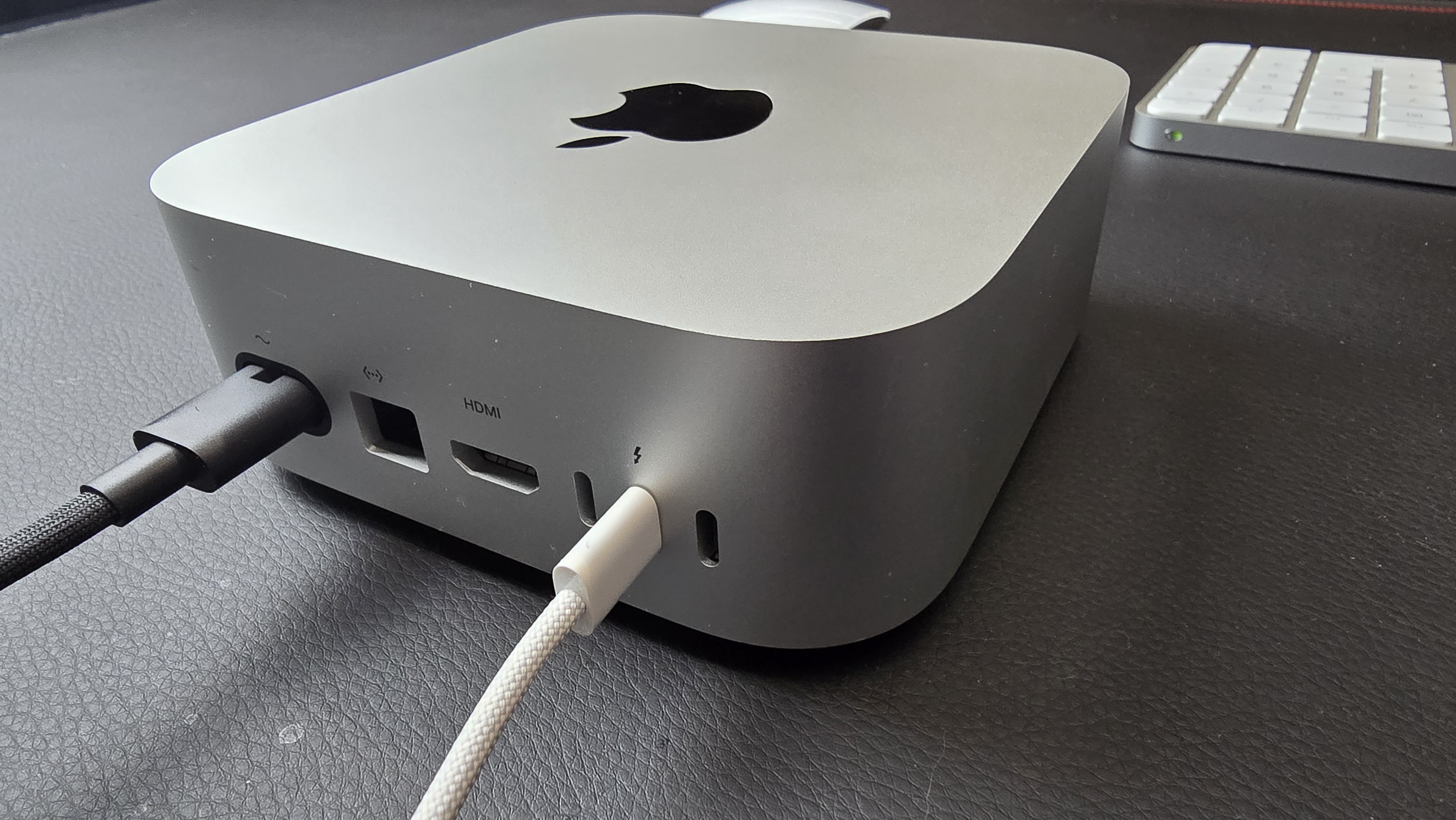
The Mac Mini Shortage: When AI Ate My Desktop (and Yours Too)

Why Mac mini and Mac Studio Are Suddenly Hard to Buy

Trying to order a new Mac mini or Mac Studio lately can be frustrating. Many buyers are seeing shipping estimates that stretch for weeks, sometimes longer. And no — it’s not because of a viral trend on :contentReference[oaicite:0]{index=0}. The real driver appears to be the rapid rise of local artificial intelligence workloads.

In simple terms, more developers, researchers, and tech enthusiasts now want powerful AI systems running directly on their desks instead of in remote data centers. That shift is creating unexpected pressure on certain Apple desktop models.

The Growing Demand for Local AI Processing

For years, serious AI development mostly depended on cloud infrastructure. Companies relied heavily on hardware from :contentReference[oaicite:1]{index=1} or cloud platforms from :contentReference[oaicite:2]{index=2} and :contentReference[oaicite:3]{index=3}.

But recently, a different approach has gained popularity: running AI locally.

There are several reasons:

  • Privacy: Data stays on the local machine.
  • Speed: No network delay when running models.
  • Cost control: No ongoing cloud subscription for certain workloads.

This doesn’t replace cloud AI for massive model training, but for inference, experimentation, and smaller model tuning, local machines are becoming very attractive.

Why Apple Silicon Machines Became Unexpected AI Favorites

The main reason is the chip design strategy from :contentReference[oaicite:4]{index=4}.

The M-series chips combine CPU, GPU, and Neural Engine on a single chip with unified memory. Unlike traditional PCs where system RAM and GPU VRAM are separate, unified memory allows faster data access across components — which is very useful for AI inference tasks.

Other practical advantages matter too:

  • Very high performance per watt
  • Extremely quiet operation
  • Compact size (important for small local compute setups)

This combination makes these machines especially attractive for developers experimenting with local large language models and image generation tools.

The “OpenClaw AI” Mention — What Can Actually Be Verified

The term “OpenClaw AI boom” appears in some online discussions, but there is no widely verified public project or organization with that exact name that can be confirmed as a major market driver.

What can be confirmed is the broader trend: rapid growth in open-source local AI tools and frameworks is increasing demand for efficient desktop compute hardware.

If “OpenClaw AI” refers to a specific internal project, small community tool, or private initiative, I cannot confirm its scale or real impact based on verified public information.

The Positive Side of This Shift

Local AI computing is lowering the barrier to entry. Independent developers and small teams can now experiment without massive cloud budgets. This can accelerate innovation and support privacy-focused AI applications.

For many workflows, running models locally is becoming practical — something that was difficult just a few years ago.

The Downsides: Supply Pressure and Real Limits

Increased demand naturally stresses manufacturing and supply chains. Even large manufacturers cannot instantly scale production when demand spikes unexpectedly.

Also, it’s important to stay realistic about capability limits:

  • Local desktops are excellent for inference and smaller model training.
  • They are not replacements for massive data-center training clusters.

Training extremely large frontier models still requires specialized large-scale infrastructure.

What This Means for the Future

This trend suggests computing is becoming more hybrid. Some AI will stay in the cloud. Some will move directly onto personal machines. And for many users, the best solution will combine both.

The interesting part is that this shift wasn’t necessarily planned around AI specifically — but hardware efficiency improvements made it possible, and the AI community quickly adapted.

🚀 Tech Discussion:

Do you think local AI will eventually replace most cloud AI for personal use, or will cloud infrastructure always dominate heavy workloads?

Generated by TechPulse AI Engine

Bomberman's Blast to the Future (or Past?): The 'Switch 2 Edition' and My Existential Console Crisis

I was doing that half-awake morning scroll — you know the one — coffee not quite hot enough, brain not quite online yet. Then suddenly: “Super Bomberman Collection - Nintendo Switch 2 Edition.” And yeah… that woke me up fast.

Because hold on. “Switch 2”? Already? And somehow Bomberman might be tied to it? That’s the kind of headline that instantly flips a switch in your brain. Equal parts excitement and suspicion. Like… is this actually happening, or are we about to fall into another endless rumor cycle?

For years now, talk about the next console from :contentReference[oaicite:0]{index=0} has been floating around. First it was the “Switch Pro.” Then the “next-gen Switch.” The company, as usual, has said almost nothing publicly. So when a title connected to :contentReference[oaicite:1]{index=1} suddenly includes “Switch 2 Edition,” it doesn’t feel like a random naming choice. It feels… deliberate. Or at least very hard to ignore.

Bomberman Still Matters — And Not Just Because of Nostalgia

And honestly, Bomberman leading this moment? Weirdly perfect.

The :contentReference[oaicite:2]{index=2} series has always been one of those pure gameplay experiences. No complicated story needed. Just tight arenas, chaos, power-ups, and that constant tension of “did I just trap myself?” If you grew up playing it locally with friends or family, you probably remember the noise. The yelling. The accidental betrayals. The last-second escapes that somehow never worked twice.

A proper collection, if done right, isn’t just a bundle of old ROMs thrown together. It’s about preserving how those games felt. Making sure they run smoothly on modern hardware. Maybe cleaning up menus. Maybe adding small quality-of-life touches without breaking the original balance. That’s the difference between a lazy re-release and something that actually respects the history.

And for newer players, it’s basically an introduction to why this series stayed relevant for so long.

That “Switch 2 Edition” Label — Big Signal or Just Noise?

Here’s where things get interesting. And a little messy.

If a physical product is really being planned with “Switch 2 Edition” branding, that suggests something important: developers would likely need some level of clarity about upcoming hardware. Physical releases usually require long production timelines. You don’t just print boxes and manuals overnight.

But — and this part matters — there’s no fully verified public confirmation that a product with that exact title is officially scheduled or announced. So while it feels like a strong hint, it can’t be treated as proof of anything on its own.

Still… historically, third-party releases sometimes end up revealing hardware direction earlier than expected. Not intentionally. Just because supply chains and marketing timelines are complicated.

The Physical Manual Detail — Small Thing, Big Emotional Impact

The idea that a physical release might include a traditional game manual? That hits different.

People forget how important manuals used to be. Not just instructions — personality. Artwork. Backstory. Weird little developer notes. Sometimes entire mini strategy guides.

Now most boxes are basically plastic download tokens.

So if a collection really includes a manual, it’s more than nostalgia. It’s a statement. A reminder that physical media can still feel like something you actually own, not just access.

What This Could Mean — If It Turns Out to Be Real

If this points toward next-gen Nintendo hardware coming sooner rather than later, a few things become interesting:

  • Classic game collections might become a major early-life strategy for the new console.
  • Publishers could test “enhanced edition” releases before going all-in on new projects.
  • Physical collector-style releases might slowly return in premium niches.

None of that is guaranteed. But the pattern would make sense from a business and transition standpoint.

And Honestly… It’s Kind of a Perfect Gaming-World Moment

If Bomberman ends up being even a small part of the next hardware generation story, it would be oddly fitting. Not flashy. Not cinematic. Just pure gameplay history quietly showing up again.

Gaming does that sometimes. The biggest shifts don’t always start with the biggest franchises. Sometimes it’s something familiar. Comfortable. Then suddenly you realize — oh. Things are changing.

And yeah… my coffee would definitely be cold by the time I finished reading all that too.

🚀 Tech Discussion:

If a new Nintendo console really is close, which classic series would you want to see get a “next-gen collection” treatment first?

Generated by TechPulse AI Engine