
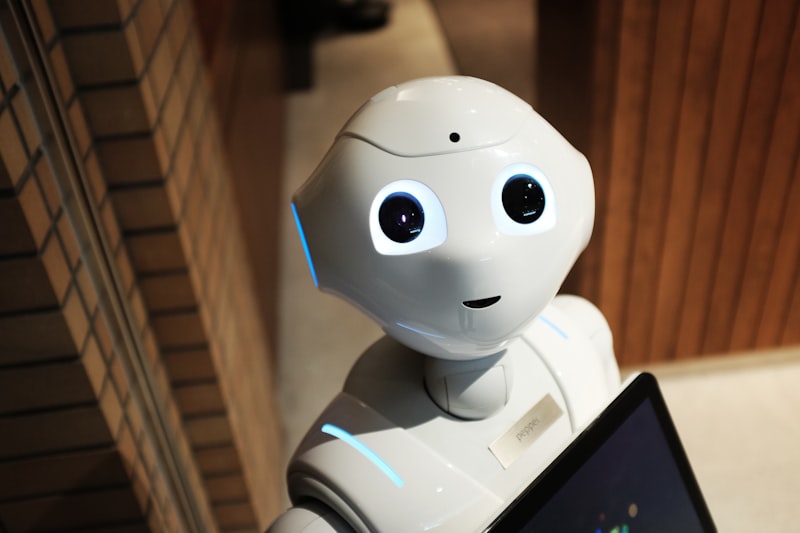
Alright, let's talk robots. Again. Specifically, surgical robots. Because honestly, sometimes it feels like every other week there's a new one promising to revolutionize healthcare, save lives, and probably make us all coffee while it's at it. But this time, it's Hugo. And Hugo, they say, can operate faster and better than a human. At The Whittington Hospital, no less. Faster *and* better? My ears perked up, despite the slight eye-roll I usually reserve for these kinds of bold claims. Because if it's true, that's a pretty big deal, isn't it?
Meet Hugo: The Whittington's Newest (and Most Metallic) Recruit
So, Hugo isn't just a fancy Roomba with scalpels. It's an advanced surgical robot system, and its job at Whittington Hospital is pretty clear-cut: assist human surgeons to provide even more precise surgery. The key word there is 'assist'. We're not quite in full-on Skynet territory where the robots are doing the entire procedure while the surgeons sip lattes. Not yet, anyway.
But the 'faster and better' part? That's what really grabs you, right? It implies a certain level of robotic superiority, a step beyond mere assistance. It suggests that for certain tasks, a machine can outperform us fleshy, fallible beings. And in a field like surgery, where precision is literally life and death, that's a thought that's both exhilarating and, let's be honest, a little unsettling. It forces us to confront this creeping question: where do we draw the line? Or, actually, *do* we draw a line?
A Brief Detour: Robots in the OR – It's Not Exactly New
Now, before we get too dramatic, surgical robots aren't some brand-new, just-rolled-off-the-assembly-line concept. The Da Vinci Surgical System, for instance, has been around for ages, relatively speaking. I remember hearing about it years ago, probably while watching some documentary late at night, thinking, "Whoa, they're really doing that?" It was groundbreaking then, allowing surgeons to perform minimally invasive procedures with incredible dexterity. But Hugo seems to be pushing the envelope a bit further, emphasizing speed and perhaps an even higher degree of accuracy.
It's not just about the robot itself; it's about the entire ecosystem it creates in the operating room. Think about it: a surgeon isn't directly holding the instrument. They're sitting at a console, often several feet away from the patient, manipulating robotic arms via joysticks and viewing a magnified, high-definition 3D image of the surgical site. It's like playing a very, very high-stakes video game. The robot acts as an extension of the surgeon's hands, but with enhanced capabilities – tremor filtration, a wider range of motion than a human wrist, and the ability to work through tiny incisions. That's the magic, or at least, part of it.
The 'Faster and Better' Conundrum: Diving into Hugo's Capabilities
So, how does Hugo achieve this 'faster and better' status? It boils down to a few key areas. First, **precision**. Robotic arms don't get tired. They don't experience hand tremors. They can make incredibly minute, steady movements that a human hand, no matter how skilled, simply can't consistently replicate over a long, arduous surgery. This means less collateral damage to surrounding tissues, smaller incisions, and ultimately, less trauma for the patient.
Second, **vision**. The advanced optics on these systems are incredible. Surgeons get a magnified, high-definition 3D view, often with enhanced lighting and contrast that can highlight structures invisible to the naked eye. Imagine operating with a microscope glued to your face, but with the added benefit of depth perception and surgical tools controlled by your every command. That kind of clarity can absolutely lead to better outcomes.
And then there's **efficiency**, which often translates to 'faster'. With less invasive techniques and enhanced precision, procedures can sometimes be completed in less time. Plus, patients often experience less blood loss and faster recovery times, meaning shorter hospital stays. That's not just better for the patient; it's better for the healthcare system, freeing up beds and resources. It's a domino effect, really. One small improvement, cascading into many others. Or at least, that's the hope.
The Good, The Gritty, and The 'What Ifs?'
Let's break down the implications, because this isn't just about cool tech; it's about people. Lives. Futures.
The Upsides (and there are many):
- **Patient Benefits:** Seriously, this is huge. Less invasive surgery means less pain, smaller scars, reduced risk of infection, and a significantly quicker recovery. Imagine going home in a couple of days instead of a week, feeling less beaten up by the whole experience. That's transformative.
- **Surgeon Enhancement:** It's not about replacing surgeons; it's about empowering them. Hugo extends their capabilities, allowing them to perform complex operations with greater ease, precision, and less physical strain. A surgeon who's less fatigued and has better tools can focus more on the critical decision-making.
- **Accessibility (eventually):** While these systems are incredibly expensive now, the hope is that as the technology matures and becomes more widespread, it will democratize access to advanced surgical care. More hospitals, even smaller ones, could offer procedures previously reserved for major medical centers.
The Downsides (and we need to talk about them):
- **Cost, Cost, Cost:** Let's not sugarcoat it. These robots cost millions to buy, maintain, and upgrade. That's a massive investment for any hospital, and it inevitably raises questions about healthcare equity. Will only the wealthiest hospitals and patients benefit initially?
- **The Human Touch vs. Robotic Precision:** While precision is paramount, surgery also involves judgment, adaptability, and the ability to react to unforeseen complications. Can a robot truly replicate the nuanced decision-making process of an experienced human surgeon, especially when things go off-script? We're still talking about the *surgeon* driving the robot, but there's a psychological shift there.
- **Training and Adoption:** It's not like you just plug in Hugo and everyone's an expert. Surgeons need extensive, specialized training to operate these systems effectively. This takes time, resources, and a commitment from the institution. It's a learning curve, a steep one.
- **The 'What If' of Malfunction:** Technology fails. It happens. What happens if a surgical robot malfunctions mid-procedure? Who's liable? What are the contingency plans? These are serious questions that need robust answers and protocols.
I remember talking to a friend who's a general surgeon, and she was both fascinated and slightly wary of these systems. She said, "It's amazing what they can do, truly. But you also feel a slight disconnect. You're not touching the patient directly. You're operating through a proxy. It's a different kind of intensity." And that's a valid point, isn't it? The human element, even when mediated by technology, still matters immensely.
So, Faster and Better? It's Complicated.
The phrase 'faster and better' really needs an asterisk, I think. It's not necessarily 'faster' in every single second of the operation, but it often leads to a faster *overall* process, from incision to recovery. And 'better' isn't just about raw speed; it's about the consistent, unwavering precision that reduces complications and improves patient outcomes. It's about taking the best of human skill and augmenting it with the unflappable accuracy of a machine.
Hugo, and robots like it, aren't just tools; they're partners. They're changing the very definition of what a 'surgeon' does, shifting the emphasis from raw manual dexterity to strategic oversight and precise control through advanced interfaces. It's a collaboration, really. A very high-tech, high-stakes collaboration. And it's only going to become more common.
What do you think about Hugo and the rise of surgical robots? Does the idea of a robot operating on you make you feel more confident or more apprehensive?
🚀 Tech Discussion:
What do you think about Hugo and the rise of surgical robots? Does the idea of a robot operating on you make you feel more confident or more apprehensive? Where do you see the line between human and machine in critical fields like medicine?
Generated by TechPulse AI Engine