
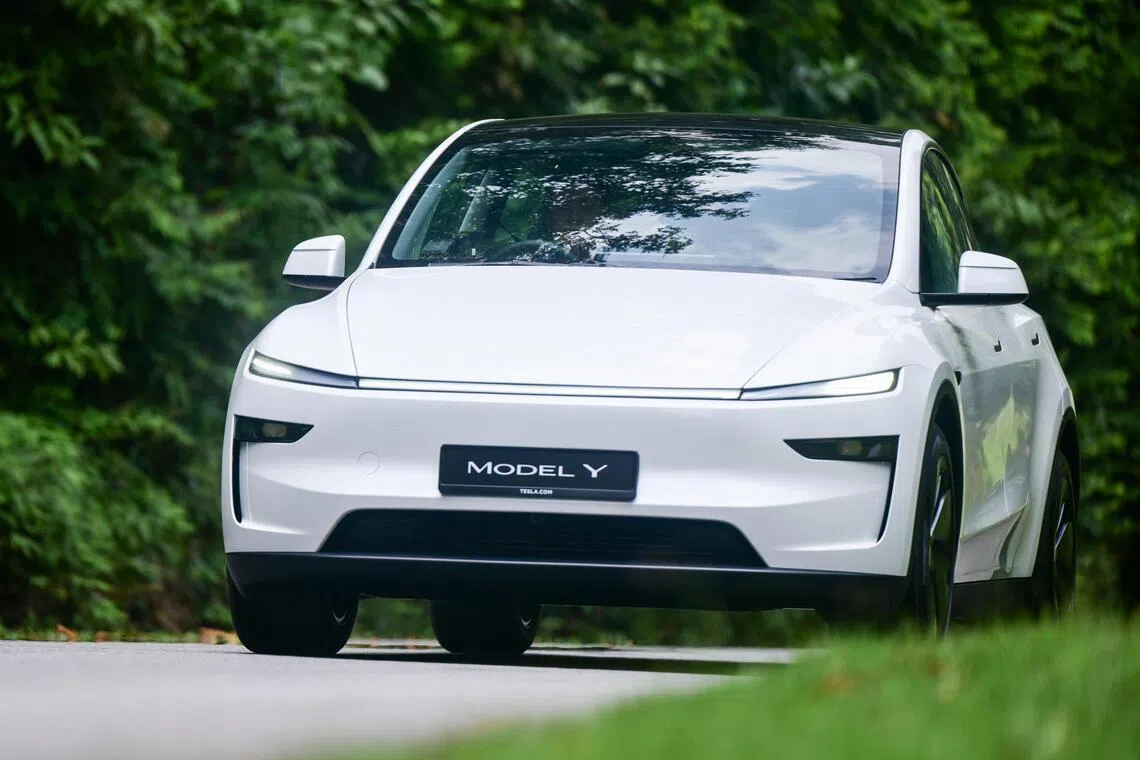
Alright, so picture this: You've got your sleek, silent Tesla, gliding along, probably thinking about the future, sustainable energy, maybe that new software update. And then, *bam*. You hit an Electronic Road Pricing (ERP) gantry, and your On-Board Unit (OBU) – that little box that handles the toll – is dead. Battery kaput. Annoying, right? Especially when you consider how often these things seem to conk out, and the hassle of getting a new one.
This isn't just a hypothetical Monday morning frustration; it's a real pain point, particularly in places like Singapore with its ubiquitous road pricing. And it led to a whole interesting little kerfuffle that actually caught my eye. The Tesla Owners Club Singapore, bless their proactive hearts, raised a red flag. Not about the OBUs themselves, but about the *external lithium battery systems* people were rigging up to power them. You know, custom packs. The DIY spirit, alive and well, even in the highly regulated world of electric vehicles. My first thought? "Oh boy, here we go. Another instance of ingenuity clashing with common sense, or at least, official guidelines."
The Spark of Concern: Why Custom Batteries?
Let's be real, the original OBU batteries aren't exactly known for their longevity. Over time, they degrade, just like any lithium-ion battery. And for a device that's crucial for daily driving (and avoiding fines!), a dead battery is a non-starter. So, what's a resourceful Tesla owner to do? Well, if you're handy, or know someone who is, you look for alternatives. And 'alternatives' often means 'custom.' In this case, it meant external lithium battery packs, designed to keep those OBUs ticking.
Now, on paper, this sounds like a clever hack. Extend the life, avoid the dealership, maybe save a few bucks. But the moment you hear "custom lithium battery pack" and "car," especially a Tesla, a little alarm bell should probably go off. Lithium batteries are fantastic; they power our phones, laptops, and, yes, our EVs. But they also have a reputation. A well-deserved one, I might add. They can be volatile. Overcharge them, puncture them, expose them to extreme temperatures, and you've got a potential fire hazard. Not ideal in a vehicle, right next to your dashboard, maybe even under the seat. That's why the Tesla Owners Club was right to be concerned. They saw members using these external setups and thought, "Hold on, is this safe? What if something goes wrong?" A very valid question, indeed.
The LTA Weighs In: "International Safety Standards, Folks!"
This is where the regulatory body, Singapore's Land Transport Authority (LTA), stepped in. And their response was, frankly, a bit of a relief. They confirmed that these customised battery packs *do* meet international safety standards. Phew! Actually, that's not quite right – let me explain. They clarified that *specific models* of these external lithium battery systems, once assessed and approved, are indeed compliant with safety regulations. Not just any old pack you slap together in your garage, obviously. There's a process. There's a standard. And that's crucial.
It brings up a wider point about certifications. When something meets an 'international safety standard,' it's not just a fancy label. It means it's undergone rigorous testing for things like thermal runaway, short-circuit protection, overcharge protection, impact resistance, and all sorts of other nasty scenarios that could turn a simple battery into a fiery mess. So, while the initial thought of a DIY battery pack might make one's palms sweat a little, the LTA's clarification suggests that the approved options have been put through their paces. This is good. This is very good.
The Implications: Safety, Innovation, and the Aftermarket
So, what does this whole saga actually mean? A few things, if you ask me.
First, and most importantly: **Safety isn't a suggestion, it's a necessity.** The fact that these custom solutions are being scrutinized and, in some cases, certified, is a testament to the importance of regulation. It means people can innovate, find solutions to common problems, and still do so within a framework that protects everyone. Imagine the chaos if every car owner just started wiring up random power sources without any oversight. Yikes. We've all seen those YouTube videos of exploding vapes. Now imagine that on a car dashboard.
Second, it highlights the **power of the aftermarket and user communities.** The Tesla Owners Club didn't just complain; they initiated a conversation that led to clarification and, hopefully, safer practices. This bottom-up approach to identifying and addressing concerns is incredibly valuable. It shows that enthusiasts aren't just about speed and aesthetics; they care about the practicalities and safety of their beloved machines too.
Also, it really underscores the **ongoing evolution of battery technology and its integration.** As our devices become more battery-dependent, the demand for reliable, long-lasting power solutions only grows. And when the OEM (Original Equipment Manufacturer) solutions fall short, the aftermarket steps in. This push and pull forces manufacturers to perhaps rethink their own designs, or at least acknowledge the pain points that drive consumers to seek external solutions. It's a feedback loop, really. A good one.
I remember once, years ago, trying to replace the battery in an old phone. What an ordeal! Tiny screws, glued-down components, the whole nine yards. It made me appreciate why people look for simpler, external fixes. This OBU situation feels a bit like that, but with higher stakes. Because, you know, a car. On a road. With other cars. The stakes are definitely higher.
What's Next for DIYers and Drivers?
For Tesla owners (and owners of any car with similar OBU systems, I guess), this news should bring a measure of comfort. If you're considering an external battery pack for your OBU, make sure it's one of the *approved* ones. Don't just grab the cheapest thing off a shady online marketplace. The LTA's stamp of approval isn't just about avoiding a fine; it's about avoiding a genuine safety hazard. This isn't just about compliance. It's about personal safety, and the safety of everyone on the road. Safety, safety, safety. Can't stress that enough.
For the aftermarket industry, it's a clear signal: innovation is welcomed, but not at the expense of safety. Get your products tested. Get them certified. Earn that trust. There's a huge market for clever, reliable, and *safe* solutions to everyday tech problems.
And for us tech writers, it's another reminder that technology isn't just about the shiny new gadgets. It's about how those gadgets integrate into our lives, the problems they solve, the new problems they create, and the constant dance between innovation and regulation. It's never a dull moment, that's for sure.
🚀 Tech Discussion:
So, with the LTA confirming that *some* customized battery packs for Tesla OBUs meet international safety standards, how do you feel about aftermarket modifications for essential car components? Does a certification truly alleviate all your concerns, or do you still lean towards OEM parts for critical functions?
Generated by TechPulse AI Engine